








Multiple Payment Options ✔️ Fast and discreet shipping ✔️ Customer Service Monday - Friday 10:00 - 16:00 ✔️ Free Goodies
Fast and discreet shipping!
Functional Mushrooms
Whether you're new to functional mushrooms or already know exactly what you're looking for, at 24High you'll find a wide range of species and product forms, including mushroom powder, extracts, capsules, tinctures and edibles. Not sure which species or form suits you best? Below we explain the differences and introduce you to the best-known functional mushrooms.
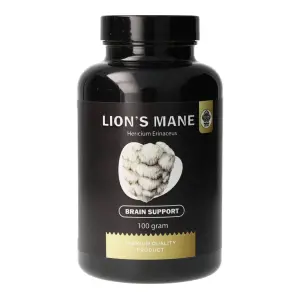


What are functional mushrooms?
Functional mushrooms is an umbrella term for mushroom species that are sold as powders, extracts or food supplements, among other forms. Well-known examples include Lion's Mane, Reishi, Cordyceps, Chaga, Shiitake, Maitake and Turkey Tail. Some of these species, such as Shiitake and Maitake, are simply used in the kitchen too. Others are mainly dried, ground or processed into extracts, capsules and liquid products. The term ties in with the broader concept of functional food. Research into functional foods gained a lot of attention in Japan from the 1980s onwards. Several mushroom species also have a long tradition of use. Reishi, for example, has been used in various Asian countries for a very long time, while Chaga has a traditional place in Russia and Northern Europe, among other regions.
Today you'll find these species in all kinds of forms in smartshops and health shops. Which form suits you best mainly comes down to taste, convenience and personal preference.
Which functional mushroom should you choose?
Lion's Mane, Reishi, Cordyceps, Chaga, Turkey Tail, Shiitake and Maitake are quite different from one another. Not only in appearance and natural habitat, but also in taste, tradition of use and the forms they come in. Below you'll get to know the best-known species in our range.
Lion's Mane: the striking bearded tooth mushroom
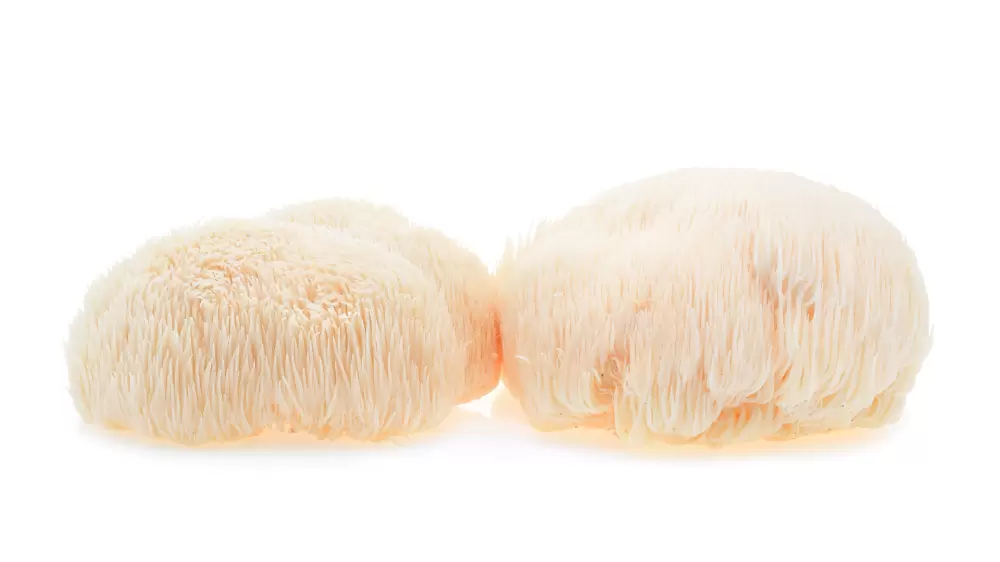
Lion's Mane (Hericium erinaceus) is also known as the bearded tooth mushroom or pom pom mushroom. The name is well chosen: instead of the usual cap with gills, the fruiting body is made up of long, white spines that hang down. This makes the mushroom look like a white wig or the mane of a lion. The species grows naturally on trunks and damaged parts of broadleaf trees, with older trees and dead wood being ideal spots. Lion's Mane occurs naturally in parts of Europe, Asia and North America. It is also a special edible mushroom. The fruiting body has a fairly firm texture and a relatively mild flavour, which is why the fresh mushroom is used in cooking in some countries.
In our functional mushroom range, you'll mainly find Lion's Mane in dried and concentrated form. It is available as Lion's Mane powder, capsules, Lion's Mane tincture, extract and edibles. Which form you choose is mostly a matter of convenience and taste. You can mix the powder yourself into coffee, cacao or a smoothie, while capsules and drops are easier to dose.
Reishi: a mushroom with a long Asian tradition
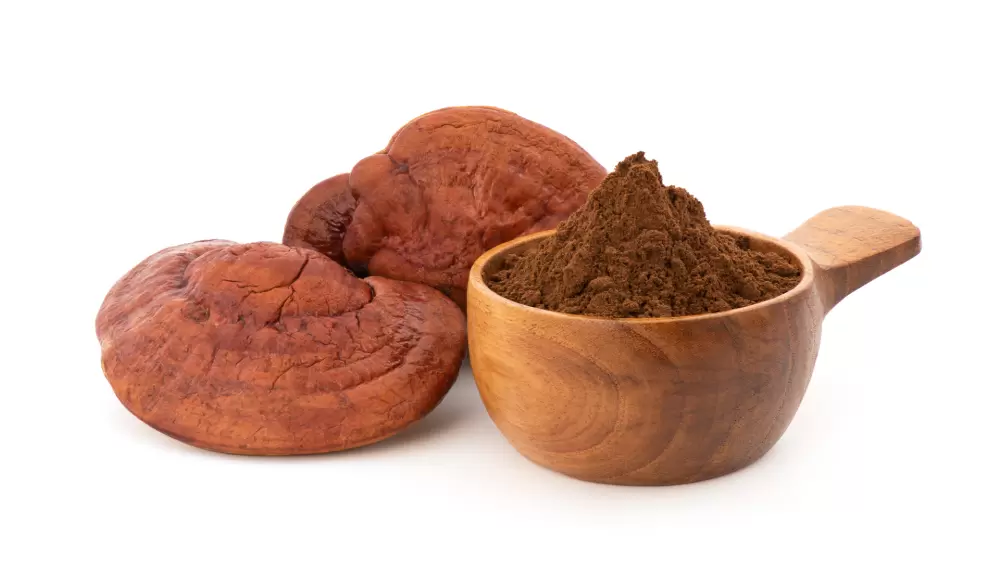
Reishi is the best-known name for mushrooms from the Ganoderma genus. On product packaging you will often see the scientific name Ganoderma lucidum. Reishi looks very different from an ordinary edible mushroom. The fruiting body is firm and woody, often with a reddish-brown, glossy top. The mushroom grows on wood and can be found on trunks, stumps and tree roots. In China, Reishi is known as Lingzhi, and it has a long tradition of use there and in other parts of Asia.
Unlike Shiitake, for example, Reishi is usually not eaten as a regular mushroom because of its tough texture and distinctly bitter taste. That's why Reishi today is mainly processed into powders and extracts. At 24High you'll find it as Reishi extract, capsules and powder. Reishi powder has an earthy and clearly bitter taste, so people who use the powder often mix it into a drink where that flavour works well, such as tea, coffee or cacao. Capsules are an alternative if you'd rather not taste it.
Cordyceps: a remarkable group of fungi
Cordyceps is an umbrella name for several related fungal species. On products you'll mostly come across names such as Cordyceps sinensis and Cordyceps militaris. The way Cordyceps lives in nature is quite unusual. Several species in this group live as parasitic fungi on insects or their larvae and pupae, and the fruiting body of the fungus eventually grows out of the infected host. Cordyceps militaris, also known as the scarlet caterpillar club, is recognisable by its striking orange to orange-red fruiting body. This species can be cultivated under controlled conditions.
The name Cordyceps sinensis is still widely used in the supplement world, but the current scientific name of this species is Ophiocordyceps sinensis. This fungus occurs naturally in high-altitude regions of Asia, including parts of the Himalayas. With Cordyceps products, it's worth checking the exact species and composition stated on the label. Depending on the product, you'll find Cordyceps as powder, extract and capsules.
Chaga: no ordinary mushroom
Chaga (Inonotus obliquus) is probably the strangest sight in this line-up. If you see Chaga on a birch tree for the first time, you might not even recognise it as a fungus. On the outside, Chaga forms a black, cracked mass that looks a bit like burnt wood or charcoal, while the inside is dark brown to rusty brown. Chaga mainly grows on birch trees in cold and temperate regions of the Northern Hemisphere. The black mass on the tree is not a regular fruiting body like you see in many other mushrooms, but a compact mass of fungal tissue.
Chaga has a long tradition of use in Russia and Northern Europe, among other places, where the dried material was used for hot drinks. Today you'll mainly find Chaga as a finely ground powder, dried chunks or extract. Chaga powder can be brewed with hot water as chaga tea or added to other hot drinks. Capsules and concentrated extracts are available too.
Turkey Tail: the colourful bracket fungus
The Turkey Tail mushroom (Trametes versicolor) is a small bracket fungus that is common across Europe and North America. Its name comes from the coloured bands on the fruiting body, which resemble the fanned-out tail of a wild turkey. The thin, fan-shaped caps often grow in overlapping tiers on wood.
The mushroom is made up of different concentric colour zones. Grey, brown, beige and sometimes bluish or orange tones can all appear in a single fruiting body. Turkey Tail mainly grows on dead wood, tree stumps and fallen trunks of broadleaf trees, where it plays a role in breaking down wood. Because of its thin but tough, leathery texture, Turkey Tail is not usually eaten like a regular culinary mushroom. For products, it is therefore mostly dried, ground or processed into an extract.
Shiitake: a world-famous edible mushroom
Shiitake (Lentinula edodes) has a special place in this category. It is not only a mushroom that is processed into powders and supplements, but above all one of the best-known edible mushrooms in the world. The species originally comes from East Asia and grows naturally on the dead wood of broadleaf trees. Shiitake has been cultivated for a very long time. Traditionally, this was done by inoculating logs with the fungus and letting the mushrooms grow straight out of the wood.
The name Shiitake is Japanese, with the second part, take, meaning mushroom. The species has a brown cap, a firm texture and a rich, savoury flavour, which is why it's widely used in Japanese, Chinese and Korean cooking. Besides fresh and dried Shiitake, there are also finely ground powders and extracts. In products that combine several mushroom species, Shiitake is often paired with Maitake, Reishi and Lion's Mane.
Maitake: the Hen of the Woods
Maitake (Grifola frondosa) is a large mushroom made up of dozens of overlapping, fan-shaped caps, allowing the whole fruiting body to grow into an impressive cluster. In English, Maitake is also known as Hen of the Woods. The name refers to the tightly packed greyish-brown caps, which look a little like the ruffled feathers of a hen. Maitake mainly grows at the base of old broadleaf trees, including oaks, and can return to the same spot year after year.
Like Shiitake, Maitake is an edible mushroom that is widely used in Asian cuisine. It has a firm texture and a characteristic savoury, earthy flavour. For functional mushroom products, Maitake is also dried and ground or processed into an extract. At 24High you'll find Maitake as powder and capsules, among other forms.
Mushroom blends: combining several species
You don't have to choose just one species. There are also products that combine different mushroom species. One example is Power 5, which brings several species together in one product. With a mushroom blend, always check the ingredient list. It shows which mushroom species are used and whether the product contains powder, extract, fruiting body or mycelium, for example.
Powder, extract or capsules: which form suits you?
Which product form works best mainly depends on how you want to use it.
- Powder: finely ground mushroom material that you can measure out yourself and mix into a drink, for example. You will usually taste the natural flavour.
- Extract: a product in which compounds have been extracted from the original mushroom material. The label may show an extraction ratio, such as 10:1. This ratio tells you how much starting material was used compared to the amount of extract obtained, but on its own it doesn't say everything about the quality of the product.
- Capsules: a pre-measured amount, without having to weigh the powder yourself or taste much of the flavour.
- Tinctures: a liquid extract that can be measured with a dropper and added to a drink if you like.
- Edibles: products such as mushroom gummies and lollipops, where the mushroom ingredient is worked into a treat.
Looking for convenience? Then capsules or edibles are the practical choice. Want to decide how much you use yourself, or mix the product into food or drinks? Then powder or a liquid extract gives you more flexibility.
Mushroom coffee: mushrooms in your cup
Mushroom coffee is the name for coffee with added mushroom powder or mushroom extract. You can, for example, stir Lion's Mane, Chaga or Reishi powder into your coffee. Lion's Mane has a relatively mild taste, while Reishi adds a clearly bitter, earthy note. You can use a ready-made mushroom coffee product or simply add mushroom powder to your own coffee.
How to recognise a quality mushroom product
When comparing mushroom products, you can look at the raw material used, the product form and the composition, among other things.
- Fruiting body or mycelium: the fruiting body is the visible part that is usually recognised as the mushroom. The mycelium is the network of fungal threads from which a fungus grows. Check the label to see which part was used for the product.
- Extraction ratio: some extracts state a ratio such as 8:1 or 10:1. This ratio indicates how much starting material was used to make the extract. A higher ratio does not automatically mean a product is better.
- Composition: check which ingredients have been added and whether the product contains excipients, for example.
Prefer to grow your own mushrooms? Read more about growing your own mushrooms.
Not magic mushrooms, just mushrooms
The functional mushrooms in this category do not contain psilocybin and have no psychedelic effects. Looking for products from a different category? Then take a look at our magic truffles or products for microdosing.
Buy functional mushrooms online at 24High
At 24High you'll find a wide range of functional mushrooms and product forms in one place, from powders and extracts to capsules, tinctures and gummies. Check the ingredients, composition and usage information for each product and choose the form that best suits your preference. Orders are packed discreetly, with no recognisable mention of the contents on the outside of the parcel.
Frequently asked questions about functional mushrooms
Disclaimer: The information on this page is intended as general product information only and does not replace medical advice. The products mentioned are not medicines. Use a product according to the instructions on the label. If you take medication, are pregnant or breastfeeding, or have questions about use in combination with a medical condition, please consult your doctor or pharmacist first.