










Multiple Payment Options ✔️ Fast and discreet shipping ✔️ Customer Service Monday - Friday 10:00 - 16:00 ✔️ Free Goodies
Fast and discreet shipping!

Flowering cannabis guide (12/12 light cycle, stages, tips & common issues)
A flowering cannabis guide outlines the rules for the cannabis flowering stages. This is when your plant enters a 12/12 schedule, and cannabis bud development is the goal. If you are a beginner grower, then learning about the week-by-week cannabis flowering stage will be advantageous. It allows you to identify the pre-flowers of cannabis buds and reduce the risk of potential flowering problems!
The cannabis flowering stage is when plants enter a 12/12 light schedule and begin developing buds. Understanding the different flowering stages helps growers recognise healthy bud development and avoid common flowering problems.
In this article, I will talk you through all you need to know about the flowering cannabis stage. This includes how to know when cannabis is ready to flower, cannabis flowering week-by-week explained, and signs of healthy cannabis buds. I will also explain the most common mistakes a grower can make during the cannabis flowering stage, so you can flower your crops like a pro!
Table of contents:
What Is the Flowering Cannabis Guide and Why Is the Flowering Stage So Important?
Once you are ready to induce flowering and turn your vegetating plants into bloom, you will need to follow the universal flowering cannabis guide and rules. Below explains what the flowering cannabis guide is, what it covers, how the flowering stage impacts cannabis growth and yield, and the importance of understanding the cannabis flowering stages.
What Is the Flowering Cannabis Guide and What Does It Cover?
The flowering cannabis guide simply covers the number of hours of light and darkness your plants need, the correct temperature and humidity, and the correct nutrients to use. It is actually a universal rule that indoor growers have been following for decades!
How Does the Flowering Stage Impact Cannabis Growth and Yield?
- Cannabis buds will develop during the flowering period
- How many buds there are will determine the overall yields
- 12/12 schedule produces trichomes, cannabinoids and terpenes
- Plants will double or triple in size once flowering is induced
- Incorrect temperature and humidity levels affect bud development
- Heat stress can lower the quality and yield of cannabis plant buds
- A long period of darkness, 12 hours, causes phototropic plants to bloom
Why Is Understanding Cannabis Flowering Stages Essential for Growers?
It is important to understand the cannabis flowering stages so you can be well prepared, know the correct environmental conditions and nutrient delivery, and estimate how much space and maintenance your plants may need.
- Timers are set to 12 hours of light and 12 hours of dark
- Relative humidity levels are reduced to 50%
- Temperatures remain at 24 degrees Celsius with the lights on
Understanding the 12/12 Schedule and Its Role in Cannabis Flowering Stages
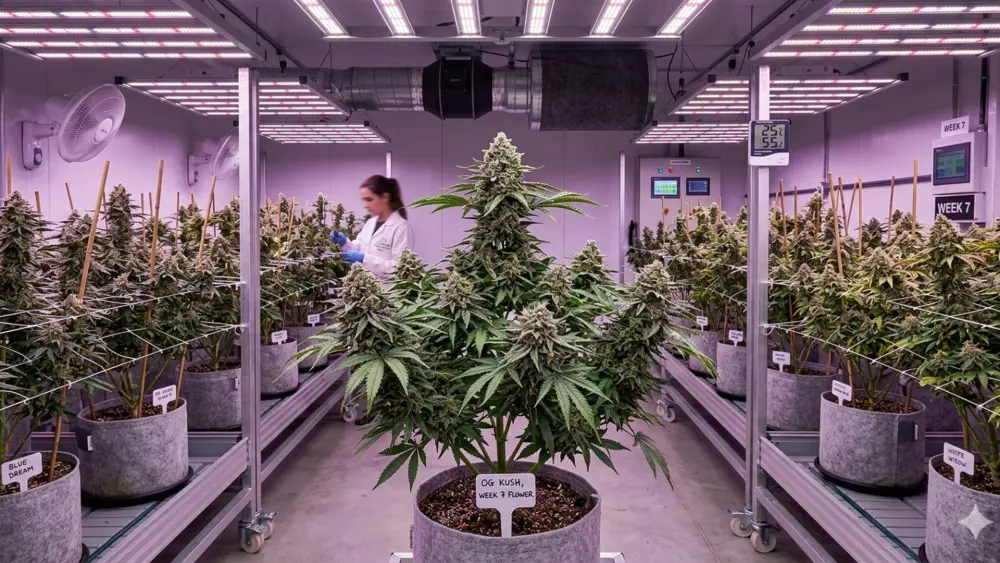
Picture - This room of flowering cannabis plants receives 12/12 consistently.
It is easy to switch the timer from 18/6 to 12/12 and sit back and let the magic happen, but understanding why a 12/12 schedule is important will benefit a grower.
Below covers what a 12/12 schedule in cannabis cultivation means, why the 12 hours of darkness trigger the cannabis flowering stage and why maintaining a consistent 12/12 is so important.
What Is a 12/12 Schedule in Cannabis Cultivation?
A 12/12 schedule refers to the number of hours of light and dark your indoor garden receives. There are 2 stages of growth, which are the vegetative stage (18/6) and the flowering stage (12/12).
- Vegetation stage = 18 hours of light and 6 hours of dark
- Flowering stage = 12 hours of light and 12 hours of dark
How Does a 12/12 Schedule Trigger the Flowering Process?
Once photoperiod cannabis plants receive a consistent 12/12 light cycle, several biological changes occur:
- Plants detect changes in day length through their light-sensitive phytochrome system.
- Flowering-related signalling pathways become active, encouraging the transition from vegetative growth to flowering.
- Plant hormones, including auxins, continue to regulate growth and development during the flowering stage.
Why Is Maintaining a Consistent 12/12 Schedule Important?
Photoperiod cannabis plants require a consistent darkness period and a 12/12 schedule so they can flower and fully mature. Ensuring that this light cycle is not changed once flowering is induced will allow the plants to produce the best possible bud quality and yield.
For more information about light intensity, distance and schedules, read our guide to using cannabis grow lights properly.
How to Know When Cannabis Is Ready to Flower Before Starting a 12/12 Schedule
The most exciting time as a grower is when you set your timer to follow a 12/12 schedule and wait for the plants to transition, produce an abundance of pre-flowers and begin bud development.
Below explains how to know when your cannabis plants are ready to flower, the signs to look out for, and how to properly determine if it is the right moment. It also explains how switching timers over too early or late can impact the results.
Scientific reference: Ahrens et al., Plants (2023).
What Are the Signs That Cannabis Is Ready to Flower?
- Plants will have a thick stem and a well-developed root system
- The plant is tall enough to fit your grow space
- The plant displays optimal health and vigour
- The plant is robust and can handle stress easily
- All plant training has been applied during 18/6
If you want to learn more about producing healthy young plants, read our guide on how to clone cannabis plants correctly.
How Can Growers Determine the Right Time to Start a 12/12 Schedule?
- If the grower is using a Sea of Green set-up and flowers after 14 days
- How tall and wide the plant is, so be as efficient as possible
- How much space do you have inside your grow room
Why Does Switching Too Early or Too Late Affect Flowering Results?
- Flowering cannabis plants too early can result in small-sized plants
- Yields will be significantly affected if the plants are too short
- Young plants may not have the root base to produce big yields
- Flowering cannabis plants too late can result in oversized plants
- Your grow space may become overrun with plants fighting for light
- Over-sized plants can affect air flow, humidity and temperature
Cannabis Flowering Week-by-Week Explained: Key Changes During Bud Development
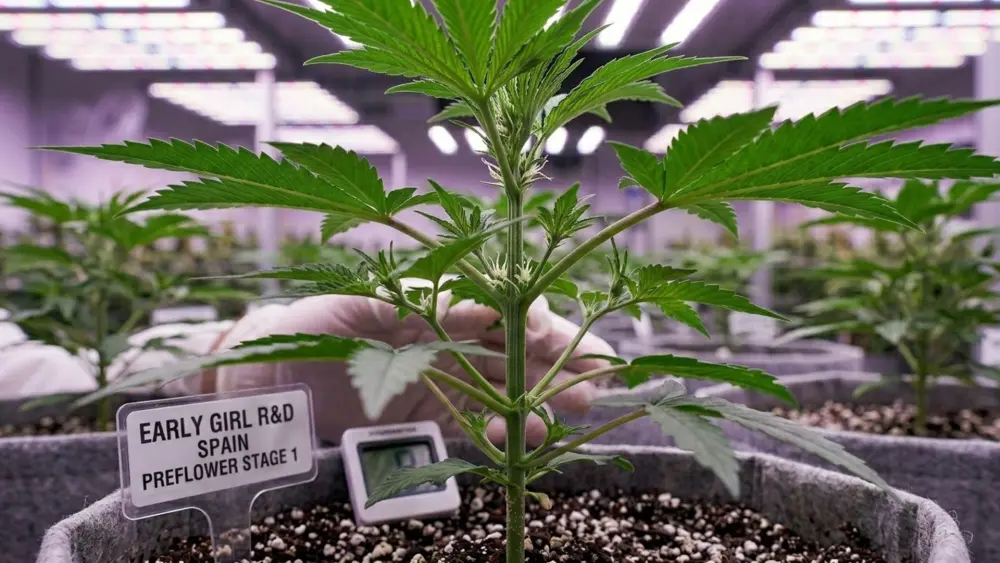
Picture - The first set of pre-flowers are developing on this autoflowering cannabis plant
From the day your plants begin to flower, they will enter the cannabis flowering stages. They are the transition stage when your plants stretch as tall as possible, the pre-flowers cannabis bud stage and then full bud development of the cannabis plant.
Below breaks down what happens and what to expect during each week of the flowering stage. It also explains how bud development progresses week by week and the benefits of following a week-by-week flowering cannabis guide.
What Happens During Each Week of Cannabis Flowering?
Below is an example of a week-by-week guide based on a 9-week flowering time cannabis strain:
| Week | Stage | Plant development |
|---|---|---|
| 1 | Transition | Plants stretch and grow taller. |
| 2 | Transition | Stretching continues. |
| 3 | Pre-flower | First white pistils appear. |
| 4 | Pre-flower | More pistils and pre-flowers form. |
| 5 | Bud growth | Bracts develop and buds form. |
| 6 | Bud growth | Buds grow and become resinous. |
| 7 | Bud growth | Buds become larger and denser. |
| 8 | Bud growth | Trichomes approach maturity. |
| 9 | Maturity | Buds reach full development. |
Signs of Healthy Cannabis Buds Throughout the Cannabis Flowering Stages
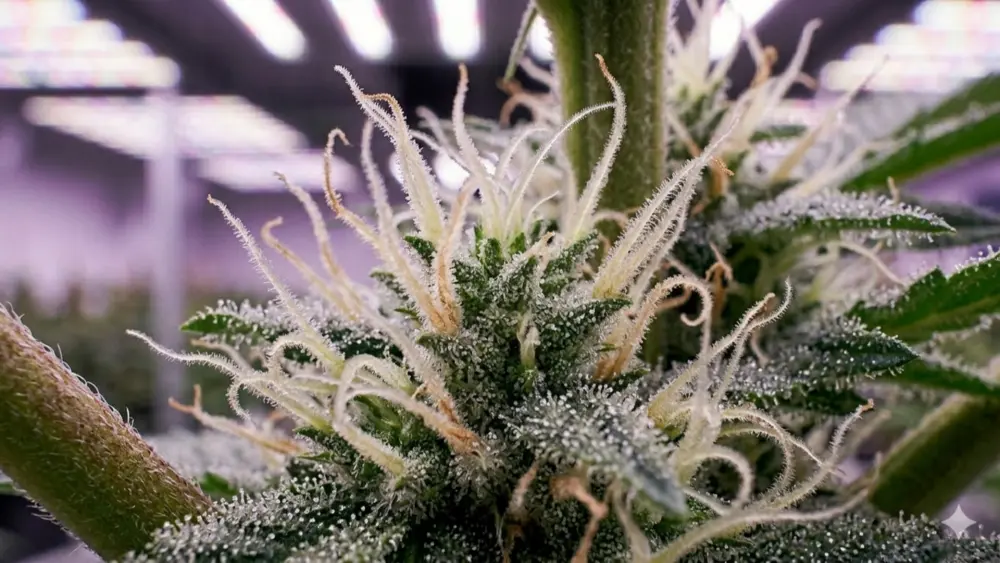
Picture - Cannabis buds produce swollen bracts and calyx that produce the dense buds
We all love big, frosty and resin-covered buds, and producing the healthiest cannabis plants and buds will determine the quality of your crop.
Below covers what the most common signs of healthy cannabis buds are, how you can monitor bud development like a pro and why healthy plants and buds result in a superior harvest.
What Are the Most Common Signs of Healthy Cannabis Buds?
- The leaves of the plants will appear healthy and without deficiencies
- The buds are covered in trichomes and with resin on the leaves
- Buds have a hard-to-squeeze and dense characteristic
- The aroma of the buds will be intense
- Buds will be sticky and oily to the touch
- There are no signs of insect damage on the buds or leaves
- There are no signs of mould or powdery mildew on the colas
To learn more about recognising plant health problems, read our guide on how to identify cannabis nutrient deficiencies.
How Do the Most Common Flowering Problems Affect Cannabis Growth?
- Cold or hot temperatures will cause plant growth to slow and become stunted
- pH issues can cause a nutrition lockout, resulting in smaller yields
- Light burn will cause the top colas to turn albino white
- High humidity and poor air flow will encourage mouldy buds
- Light breaks are the main cause of hermaphrodite plants
Why Do Healthy Cannabis Buds Lead to Better Harvest Quality?
Healthy cannabis buds will produce a superior crop quality due to:
- Optimal terpene and cannabinoid development
- The maximum amount of trichomes present on buds and leaves
- Bract and calyx development will be perfectly mature
- No degradation due to pathogens or insect damage
Frequently Asked Questions About the Cannabis Flowering Stage
Sources and Scientific Information
This article is supported by scientific research on cannabis flowering, photoperiods and trichome development.
- Is Twelve Hours Really the Optimum Photoperiod for Promoting Flowering in Indoor-Grown Cultivars of Cannabis sativa? – Plants (2023).
- Morphological Characterization of Cannabis sativa L. Throughout Its Complete Life Cycle – Plants (2023).
- Glandular Trichome Development, Morphology, and Maturation Are Influenced by Plant Age and Genotype – Journal of Cannabis Research (2023).