








Multiple Payment Options ✔️ Fast and discreet shipping ✔️ Customer Service Monday - Friday 10:00 - 16:00 ✔️ Free Goodies
Fast and discreet shipping!

How to Use Cannabis Grow Lights Properly (Top Tips for Maximum Yield)
Even though setting up a grow light is as simple as plugging it into the timer and switching it on, there are ways to make sure you get the most out of it! Not only will making sure your grow light is set up correctly ensure better light spread and penetration, but it will also enhance yield capability.
Correctly setting up your grow lights improves light distribution, prevents light stress, and helps maximise cannabis yield by providing the optimal balance between light intensity, distance and schedule.
In this article, I explain how to use grow lights for cannabis, the correct grow light distance for cannabis, the best cover light schedule for indoor cannabis, light intensity and PPFD, risk of light burn and stress, and provide my top tips.
What Is the Best Way to Use Grow Lights for Cannabis?
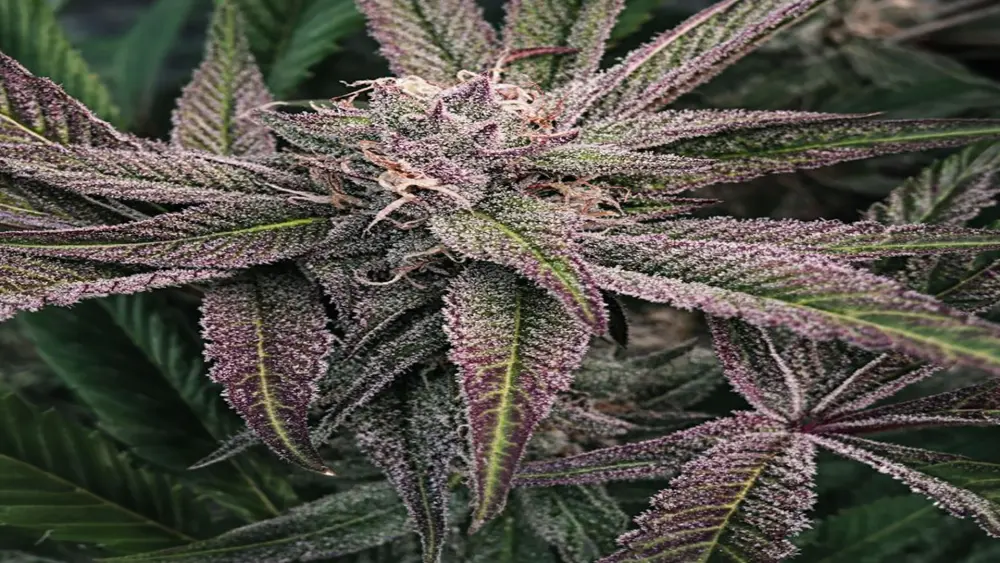
Picture - This flowering plant is produces resin in response to the light intensity
Your grow lights provide your plants with the PAR-rich spectrum they need for growth and development. Making sure you provide the best grow light schedule, combined with optimal light intensity and PPFD, will maximise growth and resin production, as covered below.
What Is The Best Grow Light Schedule for Indoor Cannabis?
During the lifecycle of a cannabis plant [1], there will be three stages of development. The seedling stage, which lasts only 2 weeks; the vegetation stage, where your plants focus on roots, leaves, side branches, and nodes; and the flowering stage, where female plants produce buds.
Growth stage
- Seedlings
- Vegetation
- Flowering
Light cycle, distance and PPFD
- Seedlings – 18/6 cycle – 12-18 inches – 200-400 µmol/m²/s
- Vegetation – 18/6 cycle – 24-30 inches – 400-600 µmol/m²/s
- Flowering – 12/12 cycle – 24-30 inches – 600-1050 µmol/m²/s
Why Proper Cannabis Light Intensity and PPFD Matter for Maximum Yield
When discussing light intensity, you have to keep in mind that brightness is not important; photosynthetically active radiation (PAR) is what counts. When there is not enough light intensity, cannabis plants are not able to perform at their fullest. Give your plants the right amounts of PPFD, nutrients and carbon dioxide, and you have a winning recipe for achieving the maximum yield.
How to Use Grow Lights for Cannabis to Maximise Growth and Resin Production
- Grow lights should be placed at the correct distance away from the canopy top
- Trichomes act as a sunblock for the plants, so more intense light means more resin
- You should check the PPFD levels of your grow space using a PAR meter
- Raise your grow light as your plants grow, and keep the same distance
Understanding Cannabis Light Intensity, PPFD, and Light Stress
It can sound technical and overwhelming when someone explains how light intensity is measured and what the correct amount is. Too little, and the plants will be light-hungry; too much, and you will inflict light stress. Below is a breakdown of how much light to give your plants, how to avoid light stress and how to prevent it.
What Is PPFD in Cannabis Cultivation and What Levels Do You Need?
If you have ever checked out an LED company and their lights, you will have seen them explain how efficient and PAR-rich the grow light is, using the term PPFD. Photosynthetic Photon Flux Density is a way to measure exactly how many PAR photons are present in a given area. PPFD is expressed as micromoles per square metre per second (µMol/m2/S).
- Seedlings require 200-400 µmol/m²/s
- Vegetating plants require 400- 600 µmol/m²/s
- Flowering plants require 600-1050 µmol/m²/s
Why Cannabis Light Intensity Can Cause Light Stress or Light Burn in Weed Plants
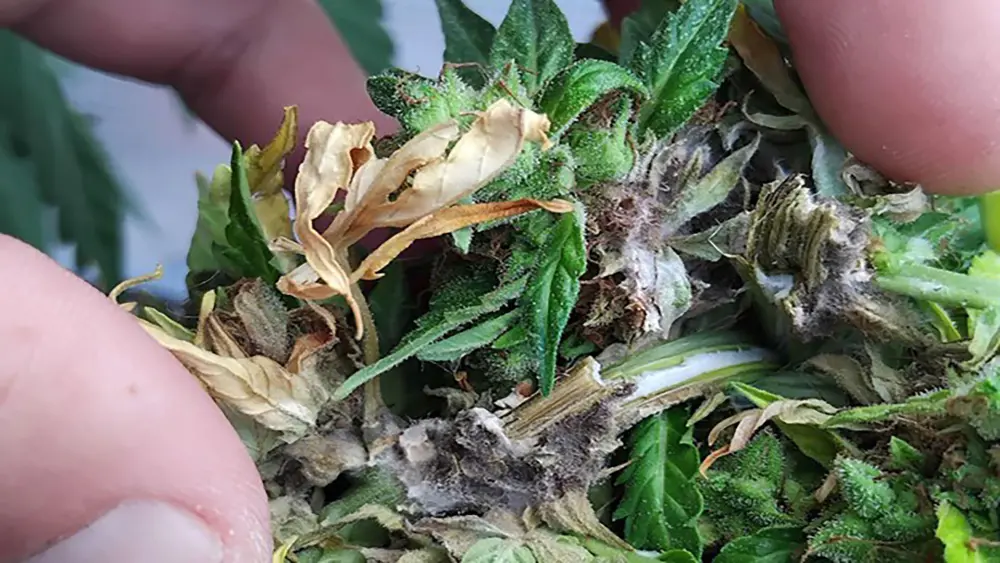
Picture - Grow lights kept too close will cause plants to become mouldy as shown here
The last thing you want to do is not give your plants enough PAR, especially during the flowering period, but did you know you can actually give plants too much light? Light stress occurs when the grow light distance is too close, and can cause the foliage and buds closest to the light to suffer.
- Green leaves become pale and bleached of chlorophyll
- Leaves turn yellow or fully white
- The foliage can feel dry, crispy and paper-thin
- The buds will have been bleached white and will have no aroma
How to Adjust Cannabis Light Intensity to Prevent Light Stress
You will need to invest in a PAR meter to check the different points in your grow room. All you need to know is that seedlings require 200-400 µmol/m²/s, vegetating plants require 400-600 µmol/m²/s and flowering plants [2] require 600-1050 µmol/m²/s.
Dimmable LED grow lights are an excellent solution for maintaining optimal PAR levels throughout the plant’s lifecycle. You can also use the correct light hanging distance to make sure you are not too close or far away from the pinnacle PAR levels.
Grow Light Distance for Cannabis: Getting It Right
Hanging your grow light takes only a few minutes, but hanging it correctly at the optimal distance from your plants is advantageous and yields the best results. Below explains how far to keep the light, why the distance matters for plant health and how far LED light should be for optimal growth.
What Is the Ideal Grow Light Distance for Cannabis Plants?
Growth stage
- Seedlings
- Vegetating plants
- Flowering plants
PPFD levels
- Seedlings – 200-400 µmol/m²/s
- Vegetating plants – 400-600 µmol/m²/s
- Flowering plants – 600-1050 µmol/m²/s
Why Grow Light Distance Matters for Preventing Light Burn in Weed Plants
- The correct distance ensures the optimal amounts of PAR
- The heat from the lights will not cause heat stress
- Grow lights too close can significantly increase the temperature
- Plants too close to a hot light are at risk of mould
- Cannabinoid and trichome production decline with light burn
- Germinating cannabis seeds need low levels of light intensity
How Far Should LED Lights Be from Cannabis Plants for Optimal Growth?
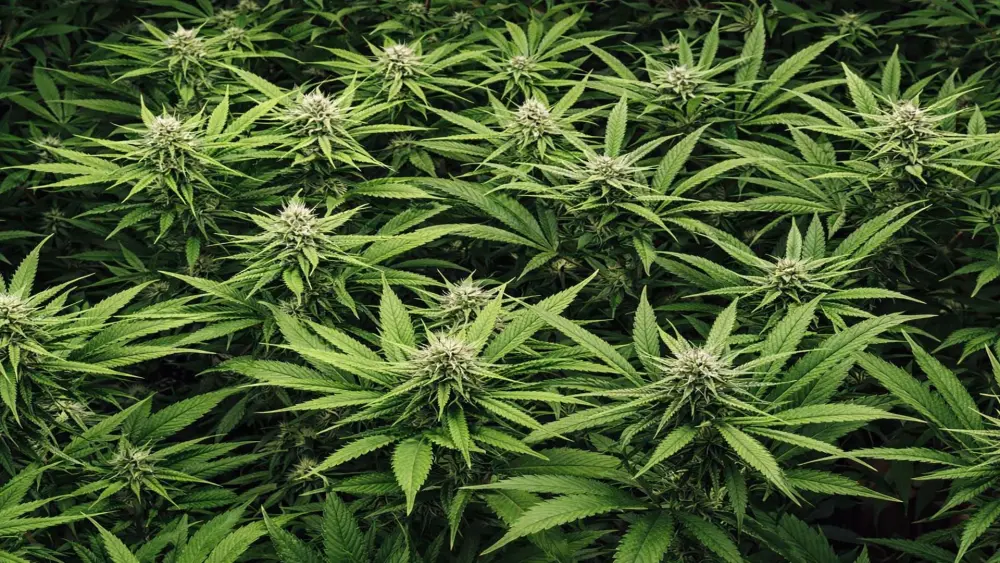
Picture - These plants are in week 5 of flower so can take more intense light
Below is a table that can serve as a guide for determining how far to keep the light from the tops of your plants.
Growth stage
- Seedlings
- Vegetation
- Flowering
Recommended light distance
- Seedlings – 12-18 inches
- Vegetation – 24-30 inches
- Flowering – 24-30 inches
My Top Tips on Grow Lights for Cannabis Cultivation
Below are three top tips you can apply in your grow room to achieve the optimal light distance and avoid light burn on your weed plants.
Tip #1 - Research Before Buying
Do plenty of research before spending your hard-earned money on a grow light. There are lots of great brands out there, so my tip is to check the light's PPFD levels and buy a dimmable version.
Tip #2 PAR Meter
If you want to be a professional grower with the perfect PPFD levels, buy a PAR meter. With a PAR meter, you can immediately see whether you are in the correct range or need to increase the light intensity.
Frequently Asked Questions (FAQ)
Read more about this topic
- How to germinate cannabis seeds
- How to identify cannabis nutrient deficiencies (complete guide with symptoms & fixes)
- Best Grow Lights for Indoor Cannabis Cultivation (What to Choose & Why)
Sources
Disclaimer
This article is for informational purposes only and does not constitute professional or legal advice. Cannabis cultivation laws vary by location, so always check local regulations before growing. Results may vary depending on growing conditions, equipment, and plant genetics.