

Multiple Payment Options ✔️ Fast and discreet shipping ✔️ Customer Service Monday - Friday 10:00 - 16:00 ✔️ Free Goodies
Fast and discreet shipping!

ORIGINS AND HISTORY OF CANNABIS: FROM HEMP PLANT TO GLOBAL PHENOMENON
The origin of Cannabis or the history of cannabis goes back thousands of years to Central Asia, where the plant was first used as a fibre crop and later gained medicinal and recreational value. In this article, you will discover the history of cannabis: from the first archaeological finds and traditional medicine to modern science and global legalisation today.
The botanical and geographical origins of cannabis
Cannabis belongs to the Cannabaceae family and consists of several species, includingCannabis sativa,Cannabis indica and Cannabis ruderalis. Scientific research shows that cannabis originated in Central Asia, probably in regions that are now part of Mongolia, northern China and southern Siberia. Genetic studies show that this region is where cannabis first grew as a wild plant. Later, it was domesticated by humans, according to the 2013 book 'Cannabis: Evolution and Ethnobotany' by Robert C. Clarke and Mark D. Merlin.
History of cannabis: Oldest use and archaeological evidence
Based on archaeological findings, experts suspect that human use of cannabis dates back some 10 thousand years. Back then, this plant was not yet used as a recreational drug, but rather in the form of hemp fibres for making clothes, ropes and baskets. Excavations in China show that cannabis was grown and used as early as 4000 BC. Around this time, it appears that the plant was probably used not only for its fibre, but also for medicinal purposes, according to this study by Hui-Lin Li.
Where did cannabis come from
Excavations have revealed not only hemp remains, but also seeds that were deliberately preserved or burnt. This suggests that cannabis was used early on, both practically (fibre) and symbolically or ritually. Archaeologists stress that the finds in central China are probably among the oldest examples of plant domestication worldwide.
Cannabis in the traditional medicine of China and other cultures
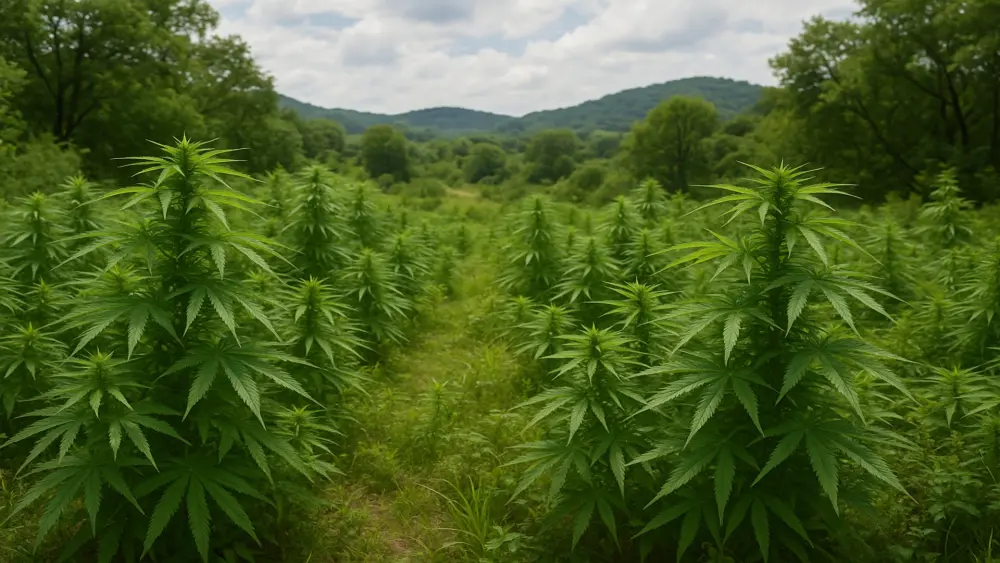
Cannabis has thus been used in traditional Chinese medicine for centuries. For example, the famous book Shennong Bencao Jing (around 2700 BC) describes cannabis as a medicinal plant against various ailments such as rheumatism, constipation and malaria. Modern scientific studies show that cannabis does indeed contain substances that have an effect on the human body's endocannabinoid system. According to this research by Ethan B. Russo, this plant could therefore promote pain relief, digestive regulation and anti-inflammation.
It is important to stress that medical applications in ancient times were often based on observations and cultural interpretations, and were not always scientifically based as they are today. Modern studies do confirm some of these traditional claims, but also show that cannabis is not effective or safe for every condition. Therefore, its use in medicine remains the subject of intense debate and research.
Spread through trade and culture
Although cannabis has its origins in Asia, the plant is now used almost all over the world. This has actually been happening for a very long time, mainly because cannabis entered other parts of the world through trade routes in the past. This happened for instance via the Silk Road, which is of course a famous road travelled by many traders centuries ago. Cannabis thus also ended up in India, where it acquired religious significance. Within Hinduism, for example, the use of a cannabis drink called bhang is a tradition.
In the Arab world, cannabis was researched and described by medical scholars in the Middle Ages. For example, the Persian physician Avicenna, known for his work Canon of Medicine, mentioned cannabis as an analgesic, writes Ernest L. Abel in his book Marihuana: The First Twelve Thousand Years. Later, cannabis also reached Europe.
Scientific breakthroughs: how THC and CBD changed medical research
Attention to cannabis as medicine increased worldwide in recent decades. Consequently, scientists have done a lot of research on this plant. They found out that cannabinoids, such as THC and CBD, can help treat chronic pain, epilepsy and other conditions. This is what Penny F. Whiting et al wroteabout in a 2015 study. Still, we should mention that cannabis is not necessarily accepted as a standard medicine. You won't soon see a doctor prescribing it to a patient, although there are an increasing number of countries where medicinal cannabis can be used.
How cannabis works in the body - and what the risks are
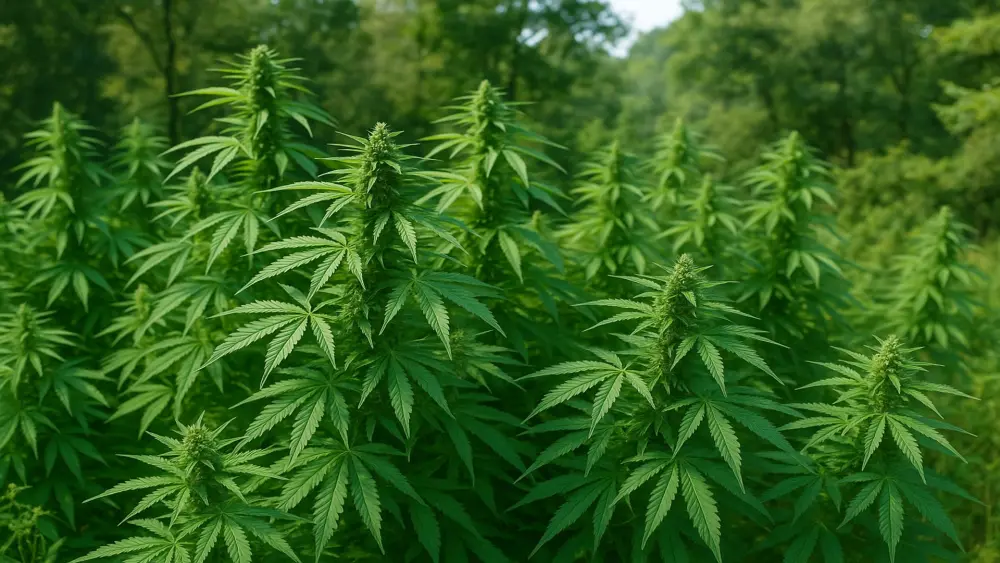
Cannabis affects the endocannabinoid system (ECS), a network of receptors such as CB1 (mainly in the brain) and CB2 (in the immune system), which are involved in pain perception, mood and appetite, among other things. The active ingredients THC and CBD bind to these receptors, leading to both therapeutic and psychoactive effects.
Although studies show positive effects in chronic pain and epilepsy, among others, experts also point out risks. Long-term recreational use of THC-rich cannabis can lead to dependence, anxiety disorders or depression, especially in young people or those with mental vulnerability.
Sources:
-
Russo, E.B. (2008). Clinical Endocannabinoid Deficiency, Neuro Endocrinology Letters. PubMed
-
Whiting, P.F. et al. (2015). Cannabinoids for Medical Use: A Systematic Review and Meta-analysis.jAMA. link.
From coffee shops to legalisation: recreational use of cannabis worldwide
Many people who use cannabis do not necessarily do so because of its medicinal properties. Recreational use of cannabis still seems to be much greater. It is not allowed in many countries, although there are somewhere cannabis is regulated. The Netherlands is, of course, the best-known example of this. Below, we list a few more countries where you can currently legally use cannabis recreationally:
- Canada
- Uruguay
- Luxembourg
- Germany
- Thailand
Do pay attention to local laws, as the rules are slightly different in almost all countries.
The origins of cannabis thus go back to prehistoric times in Central Asia. What began as a versatile fibre plant grew into a global phenomenon with cultural, religious, medicinal and recreational uses. Over the centuries, the perception of cannabis kept changing: from sacred plant and medicine to banned drug. It has since been re-regulated in several countries.
Disclaimer: This article is for informational purposes only. It is not medical, legal or professional advice. Use of cannabis is subject to local laws; please inform yourself well about the rules in your region before using or purchasing products.
Written by Elke Folkersma - content developer at Elke Media.
As a professional blog writer, Elke focuses on accessible and well-researched content about health, well-being and responsible use. For specialist blogs, she collaborates with trusted sources and recognised professional literature