




Multiple Payment Options ✔️ Fast and discreet shipping ✔️ Customer Service Monday - Friday 10:00 - 16:00 ✔️ Free Goodies
Fast and discreet shipping!

DO CRYSTALS REALLY WORK OR ARE THEY JUST PRETTY?
Crystals have been used for centuries as jewellery, ritual objects and symbols of power. Many people believe that these natural products are not only aesthetically pleasing, but also possess healing, protective or energetic powers. From amethyst supposedly helping against stress to rose quartz attracting love, the claims are numerous. But are they true? Do crystals really work, or is it mostly the power of suggestion? In this article, we dive into the science to answer this question!
The spiritual and historical significance of crystals
Gemstones and crystals have been used by various cultures for centuries. Pharaohs in Ancient Egypt, for example, wore lapis lazuli as a symbol of wisdom and power. In traditional Chinese medicine, jade actually plays a role in harmonising energy. Practitioners of Ayurveda also use crystals, in this they are linked to chakras and energy flows in the body. In other words, people have been giving meaning to these stones for centuries. However, historical value is not the same as scientific evidence, so what does modern science say about crystals?
Do crystals work according to science?
When you search online for how crystals work, you come across many stories of experience, but little hard data. Scientifically, therefore, there is no direct evidence that crystals have any measurable medicinal or energetic effect on the body or mind. A study by Christopher French, for example, shows this. He gave 80 volunteers real or fake crystals and then asked them what they felt. Both groups, whether they were holding the fake crystals or the real ones, reported similar impressions, suggesting a possible placebo effect. So according to this expert, crystals do not actually work.
So why do people still feel better?
Okay, according to science, there is no physical effect when it comes to crystals. Yet, some people experience positive changes when using these beautiful stones. So why is that? Well, possibly the following reasons have to do with it:
- Placebo effect: The placebo effect is very powerful. When someone believes that a crystal helps them relax or sleep, the brain can convert that belief into a physiological response, such as a lower heart rate or reduced stress.
- Mindfulness and intention: The ritual of choosing, cleaning and using a crystal can be calming in itself. People become more aware of their feelings and intentions, which is similar to meditation or mindfulness.
- Self-care and symbolism: Crystals are often used to symbolise something you want to attract or release. This helps people deal with their emotions in a focused way. A rose quartz as a "symbol of love" can motivate people to be more open to love. It is then a form of self-direction and therefore not magic.
Personal experience: love and connection
I had moldavite with amethyst and had a wonderful experience ... I wrote a specific list of everything I wanted in someone. Super specific things. I said 'the person I seek is also seeking me...' and within a few weeks I met the love of my life, we moved in together ... I couldn't be happier"(Reddit).
Common claims
Below are a few well-known gemstones and crystals, including their potential effects and what science says about them:
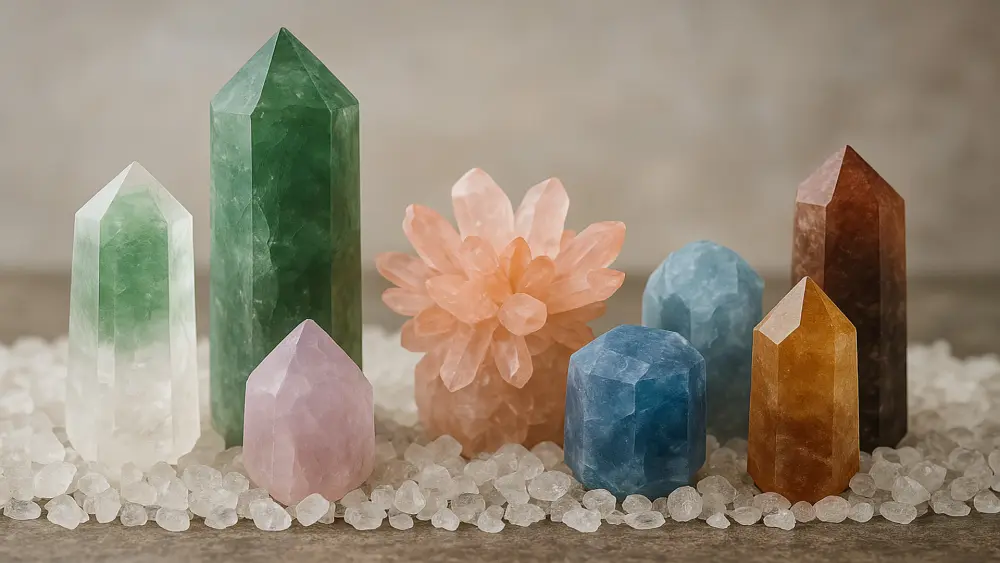
- Amethyst - against stress: Amethyst is said to be calming and reduce anxiety. However, there is no scientific evidence that this particular stone has this effect. However, we do know that colour perception and association (such as purple = calming) can have a psychological effect.
- Rose quartz - love and harmony: Rose quartz is often seen as the "stone of the heart". While it obviously cannot induce romantic feelings, wearing it can help remind people of their intention to be more loving, which influences behaviour.
- Rock crystal - energy and clarity: Rock crystal is considered an enhancer of energy. Here again: the effect depends on personal belief. There is no physically measurable "energy level" that is increased.
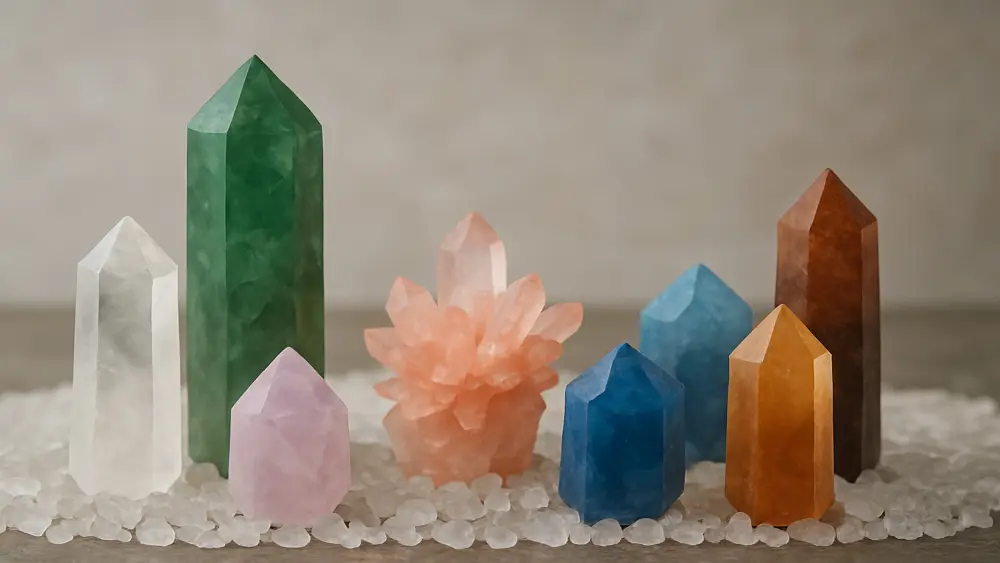
What do experts and scientific studies say?
There is extensive scientific consensus that crystals have no intrinsic medicinal effect - all positive experiences can be traced to psychological mechanisms such as placebo, expectation and ritual effects.
-
Placebo effect
Studies show that people sometimes benefit as much from a placebo as from a real medicine. For instance, a randomised trial concluded that placebo pills were almost as effective as migraine medication in relieving pain (Wikipedia,Harvard Health). A panel of researchers from a meta-analysis also confirmed that placebos work mainly for subjective complaints such as pain and stress. -
Specific to crystals
Psychologist Christopher French investigated back in 2001 whether people experienced real crystals differently from fake crystals. Result: participants reported similar sensations regardless of whether the stone was real - a classic placebo effect (Live Science). -
Rituals enhance effect
Research in medical anthropology shows that ritual actions - such as choosing, charging or using a crystal in meditation - can activate physical and emotional responses through symbolic imagination (PubMed,PMC). -
Health authorities and scientific sources
Live Science states that there is no evidence for medicinal effects of crystals beyond placebo (Live Science). Healthline warns that crystals should not be an alternative form of treatment for anxiety or depression, but can be used as an aid to meditation (Healthline). -
Wider context: pseudoscience
According to RationalWiki and Wikipedia, crystal therapy falls within pseudoscience: there are no scientific underpinnings and perceived benefits are attributed to placebo or cognitive bias (TIME).
The power of belief!
Whether you believe crystals really work actually depends on what you mean by "working". Objective and measurable effect? There is no evidence for that. A subjective feeling of well-being, peace or strength? That is very real, but more due to your own mind than to the stone itself. Because you believe that the crystal has an effect on you, you start to notice this effect, without the stone itself causing it. In this sense, you could say that crystals can have a psychological effect precisely because people believe in them. This puts them in the same category as rituals, manifesting or religious symbols. So they are potentially powerful through meaning, not physical properties.
Disclaimer: The information in this article is for educational purposes only and does not replace medical advice. If you have any health concerns, always consult a doctor or qualified medical specialist. There is no scientific evidence that crystals can cure physical ailments.