







Multiple Payment Options ✔️ Fast and discreet shipping ✔️ Customer Service Monday - Friday 10:00 - 16:00 ✔️ Free Goodies
Fast and discreet shipping!

HALLUCINATING: WHY DO PEOPLE LIKE IT?
Hallucinations have a bad name, mainly because they can be a symptom of mental illness. Yet there are some people who actually enjoy hallucinating using psychedelic substances, such as magic mushrooms. The hallucinations can then not only be fun, but also fascinating, and sometimes they even provide useful insights. We delve into hallucinations and why they can be enjoyable in this article.
What are hallucinations?
A hallucination is a sensory experience with no external stimulus: you see, hear, feel or smell something that is not there in reality. This can range from simple visual patterns to complex experiences such as seeing landscapes or hearing voices. Hallucinations come in several varieties:
- Visual - colours, patterns or lifelike images
- Auditory - voices, music or sounds
- Tactile - as if something is touching your skin
- Olfactory/gustatory - smells or tastes

How can you hallucinate?
Hallucinations can come spontaneously, but they can also be induced by:
- Psychedelic drugs, for example with psilocybin truffles, mescaline or LSD
- Meditations or rituals
- Sleep deprivation or extreme fatigue
- Mental disorders
- Sensory deprivation
The appeal of psychedelic hallucinations
Psychedelic drugs can induce hallucinations, this is possible with psilocybin and LSD, among others. Much research has been done on this in recent decades, including why some people experience hallucinations as fun and pleasurable.
Visual wonderment
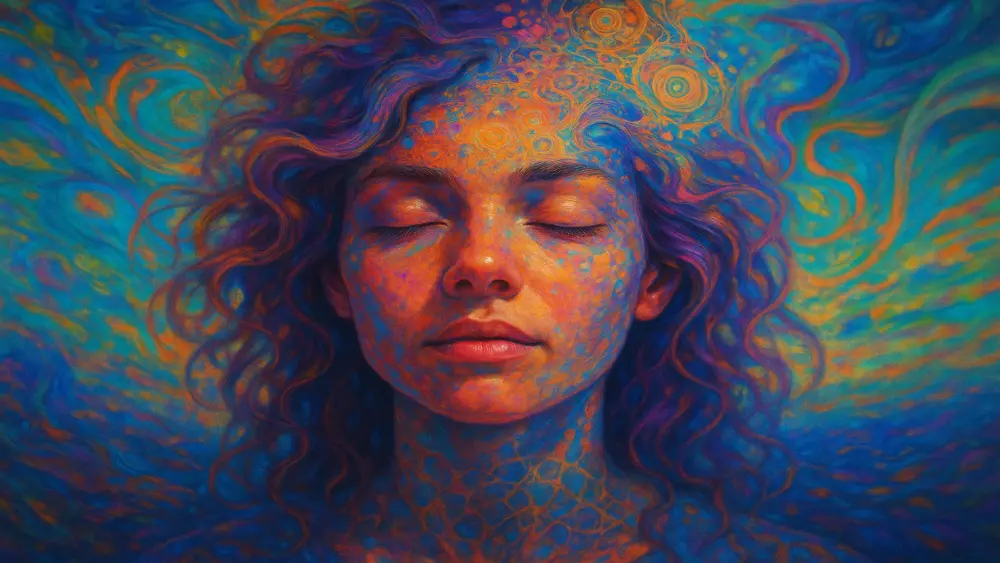
Want to feel like you are walking into a Van Gogh painting? That is possible with the help of a hallucination, although everyone experiences it differently. What most experiences have in common, however, is the visual splendour of the hallucinations, according to this study by Mardi J. Horowitz. Many users speak of colours, patterns and shapes they have never seen before in their lives. This aesthetic experience is often compared to art or dream worlds. Incidentally, you don't have to experience visual hallucinations during every trip.
Feeling of connection
In addition, hallucinations are seen as fun by some people because it gives them a sense of connection with everything. People often describe this as an experience of "being one with the universe", a feeling of deep love or the disappearance of the ego. It is for this reason that psilocybin is sometimes used as a therapy drug, about which research was conducted in 2018. This showed that users' personality can change, which may be related to the feeling of connection.
What happens in your brain during a hallucination?
During a hallucinogenic experience, activity in the brain changes drastically. There is less activity in the so-called Default Mode Network (DMN), a network that is normally active when you are thinking about yourself or worrying about the future. After using psilocybin truffles, for example, the DMN can be suppressed. As a result, the user sometimes experiences a loss of ego, which is also called ego-dissolution. Many people find this pleasant and liberating, as they don't have to think about work, money, relationships or anything else, not even themselves.
Is hallucinating always fun?
So hallucinations can be fun and they can also give you personal insights or changes. They are therefore often perceived as positive, but unfortunately this is not always the case. A bad trip, as an unpleasant hallucination is called, occurs occasionally and is anything but pleasant. You may experience anxiety, paranoia and loss of control, among other things, during such a psychedelic experience. Old traumas may also return. Whether hallucinating is enjoyable for you depends a lot on the following factors:
- Your mental state
- Your setting, i.e. the physical and social environment
- Your dosage
- Your guidance and experience
Under supervision and in the right conditions, hallucinations are much more likely to be positive. Hence, clinical trials nowadays always take place with professional psychologists in a controlled environment.
So why do people like hallucinations?
There are a few reasons why people can find hallucinations fun:
- Visual and sensory enrichment
- Emotional healing
- Improved creativity
A relevant scientific study:
"Effects of psilocybin therapy on personality structure", published in Acta Psychiatrica Scandinavica in 2018. In this study, researchers investigated the impact of psilocybin therapy on personality structure in patients with treatment-resistant depression.They found significant changes in personality traits, including a decrease in neuroticism and an increase in extraversion and openness, three months after treatment. PMC, PUBMED
Disclaimer: The information in this article is for educational and informational purposes only and does not replace medical advice. The use of hallucinogens can have serious psychological and physical consequences and is banned or strictly regulated in many countries. Always consult a medical specialist or expert before considering using psychedelics. The author and publisher are not liable for any consequences of using the substances mentioned in this article. This article focuses on voluntary hallucinations you can induce through psychedelics.