

Multiple Payment Options ✔️ Fast and discreet shipping ✔️ Customer Service Monday - Friday 10:00 - 16:00 ✔️ Free Goodies
Fast and discreet shipping!

WHO WAS ALBERT HOFMANN?
Of course, a new drug must first be discovered or created. Of many drugs, we do not know exactly who had this honour because they have been around for centuries or even longer. Of LSD and psilocybin - the trip substance in magic mushrooms and truffles - we do know. Albert Hofmann is his name. The best man not only accidentally changed history by making LSD in his lab, but also managed to 'find' psilocybin. Thanks to LSD, he became the godfather of psychedelics in one crucial moment. Until a very old age, he remained active in this scene. Read all about this clever Swiss chemist to whom we trippers owe a lot.
Albert Hofmann's career as a chemist in a nutshell
Swiss Albert Hofmann was born in 1906. At the age of 20, he began studying chemistry at Zurich University, which he completed in 1929. He was an average chemist, and at the time had no interest in what would later become his field: psychedelics. His interest was actually in chemical structures found in plants and animals. However, he was interested in the mystical at a young age.
Immediately after his studies, he found a job in a lab developing medicines. There, he engaged in research on fungi and plants that could be used in that field. So it was that he was tinkering with the substance lysergic acid for a new medicine. He made a new form of this: lysergic acid di-ethylamide. You probably already recognise in this the abbreviation it eventually got, LSD.
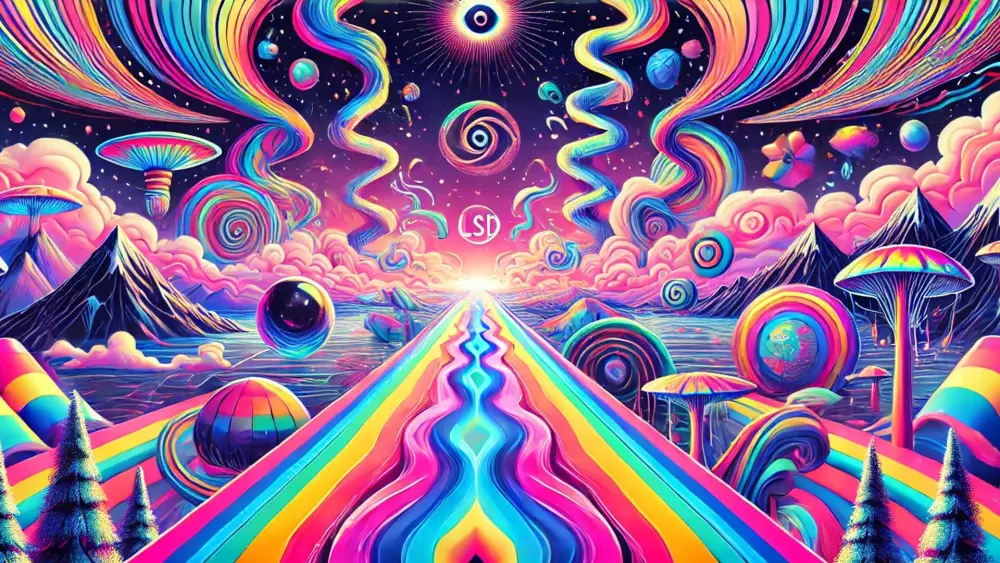
Albert Hofmann on his discovery LSD
Albert Hofmann made and discovered LSD completely by accident. What was supposed to be an ordinary drug turned out to be an intense trip drug. He got high on it twice in one week; the first time accidentally, the second time deliberately. Then, at 37, he knew his career had taken a new turn. And that he might have made world history. After LSD hit the market, it was used by psychiatrists, universities, citizens and other researchers for various purposes. Unfortunately, after much commotion, the drug was banned by law.
Hofmann called LSD his problem child partly because of this. He already refers to this in the title of his 1979 book about his history with LSD: LSD My Problem Child. An interesting book to read if you call yourself a serious psychonaut!
Want to read all about the birth of this drug? Then read our earlier article:
1958: Albert Hofman discoverer of psilocybin
Albert Hofmann is best known as the discoverer of psilocybin. What fewer people know is that he also succeeded in isolating psilocybin. Psilocybin is the compound in magic mushrooms and truffles that is converted into psilocin in your body. And that compound, in turn, causes you to trip. At least, if you take a large enough dose of it.
His salvia quest in Mexico
In 1962, Hofmann went on an expedition to Mexico, the home of an awful lot of natural trip aids that have a centuries-old tradition there. During the expedition, by the way, he not only used his eyes and hands, but also participated in psychedelic ceremonies. He returned from Mexico with some mint plants he had collected there. In the lab, he turned out to have in his hands not just some mint, but Salvia. Like LSD, Salvia is one of the strongest trip drugs under the sun - clearly something Albert Hofmann had a nose for, in other words. In his laboratory, he tried to isolate the trip substance from this plant, which he unfortunately failed to do.
Albert Hofmann's other psychedelic interesting discoveries
LSD, psilocybin and Salvia are not the only substances Hofmann looked into. Also on his list: Ololiuqui, LSA, Morning Glory and the lesser-known 4-AcO-DET.
Albert Hofmann retired in 1971, but continued to lecture and publish articles on psychedelics for decades. He reached an impressive age of 102. His wife Anita died just a year before him. Whether he owed his advanced age to his interesting discoveries remains a question mark.
Albert Hofmann (1906-2008) was a Swiss chemist, best known for his discovery of lysergic acid di-ethylamide (LSD) and the isolation of psilocybin, the psychoactive substance in certain mushrooms. His work has had a lasting impact on the science and study of psychedelics.
Major scientific publications on Albert Hofmann and his discoveries:
-
"The Past and Future of Psychedelic Science: An Introduction to This Issue".
This article discusses the history and future of psychedelic research, starting with Hofmann's synthesis of LSD in 1938. It highlights how his discoveries laid the foundation for both scientific and cultural exploration of psychedelics.
PUBMED -
"Might Microdosing Psychedelics Be Safe and Beneficial? An Initial Exploration"
This study refers to Hofmann's suggestion that low-dose LSD could be an alternative to Ritalin. The article explores the potential benefits and safety of microdosing psychedelics, a concept that goes back to Hofmann's original ideas.
PUBMED
These publications provide valuable insights into Hofmann's contributions to science and the ongoing influence of his work on current research into psychedelics.
Medical Applications and Limitations of LSD and Psilocybin:
LSD and psilocybin are being investigated for their therapeutic potential. Psilocybin has shown promising results in the treatment of depression, anxiety disorders and addiction problems. Clinical studies show that psilocybin, under controlled conditions, can provide long-term relief in therapy-resistant depression. LSD is being investigated for reducing anxiety in terminally ill patients and for cluster headaches. Both substances affect serotonin receptors in the brain, contributing to altered mood and perception. Limitations: Despite the potential benefits, there are significant limitations. LSD and psilocybin can cause intense psychological reactions, including anxiety, paranoia and psychosis, especially in people with a history of mental illness. Long-lasting effects such as hallucinogenic persisting perception disorder (HPPD) are rare.
Disclaimer:
- The information in this blog is for informational and educational purposes only and should not be construed as medical, legal or professional advice. The use of psychedelic drugs, such as LSD, psilocybin and Salvia, can carry significant risks, both physical and mental.
- Always consult a qualified doctor or specialist before considering using such substances, especially if you have mental illnesses, are taking medication, are pregnant or breastfeeding. Psychedelics can cause unpredictable effects, including hallucinations, anxiety, confusion and long-term psychological effects.
- The effects of these substances vary from person to person and their use is regulated or banned by law in many countries and regions. Readers are responsible for complying with applicable laws and regulations regarding psychedelic substances in their place of residence.
- The use of these substances is strongly discouraged for minors and vulnerable groups. The authors and publishers of this blog do not accept any liability for damages, injuries, legal consequences or other negative consequences arising from the use of the information discussed in this article. Always use with caution, under safe conditions and at your own responsibility.