







Multiple Payment Options ✔️ Fast and discreet shipping ✔️ Customer Service Monday - Friday 10:00 - 16:00 ✔️ Free Goodies
Fast and discreet shipping!

5 STEPS TO HEALTHY DIGESTION
The health of our digestive system is currently at the centre of attention. And no wonder, as many people have digestive complaints. In addition, we are learning more and more about the importance of gut flora for our overall health. In this blog, you will read how to get a healthy digestive system in 5 simple steps.
Healthy gut in a healthy body
Eating healthy is obviously something you do to have enough energy and stay healthy. But what you eat also affects your gut flora. And that gut flora is hugely important for your health. It is this microbiome (the good bacteria in your intestines) that not only help digest food, but also support your immune system and keep the intestinal wall healthy.
So a healthy digestive system is at the root of your overall health. So, how do you make sure your digestion is optimal? Take a look at the 5 steps below and apply them. You may not need to use all 5, but the more, the merrier.
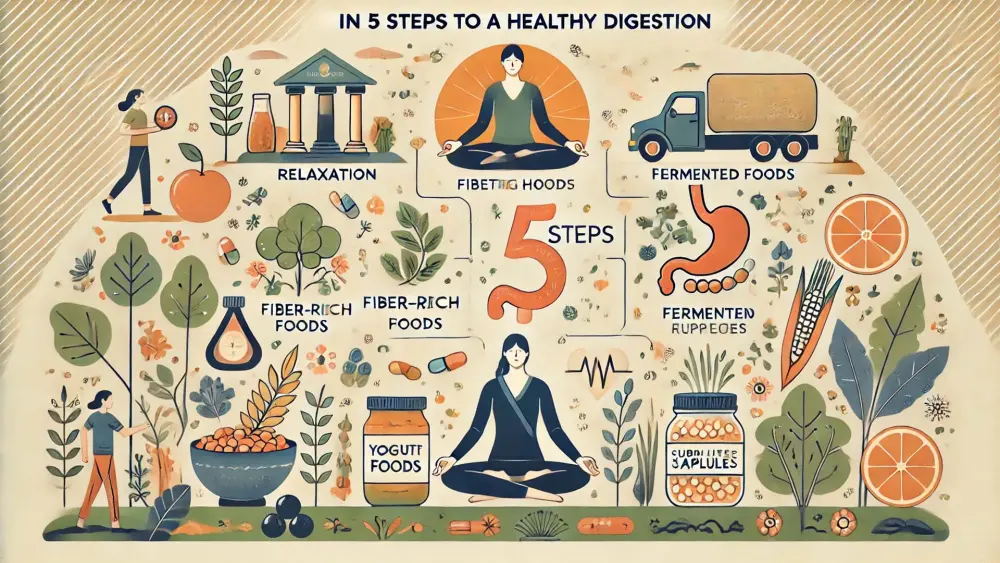
1. Time for relaxation
We all know that stress is bad for your body. But did you know that there is also a link between your digestion and your brain? Research suggests that psychological stress can disrupt the micro-organisms in our gut, even if it is short-term stress. There are different types of stress, such as psychological, sleep deprivation stress and environmental stressors.
It is important to address all these disruptions to reduce the harmful influences on your gut flora. So by taking care of your brain, you are also taking care of your digestive system. How can you handle stress better? Try to relax more often in between meals, for instance by doing some stretching exercises, a mindfulness meditation or a walk in nature. Writing in a journal can also help you cope with stress. Find the way that suits you and work on healthy digestion with this.
2. Eat more fibre
Usually, eating more fibre is not seen as a very attractive way to promote your gut health. But many people underestimate the importance of fibre and what it can do for you. This is also the reason why more than half of people do not eat enough fibre. It is recommended to get at least 30 grams of fibre every day. And that is really not that difficult.
Fibre is found in nuts, seeds, vegetables, fruits and whole grains. You can eat more fibre by regularly adding bananas, carrots, apples and wholemeal bread to your menu, for instance. It is also advisable to eat less sugar. Research shows that sugar is bad for good bacteria and actually encourages the growth of bad bacteria. If you eat less sugar and instead eat a lot of healthy fibre (the insoluble fibre), this provides a good breeding ground for the bacteria that keep your digestive system healthy.
Here is a relevant source on the role of dietary fibre in gut health:
Makki K, Deehan EC, Walter J, Bäckhed F.
The Impact of Dietary Fiber on Gut Microbiota in Host Health and Disease.
Cell Host Microbe. 2018 May 9;23(6):705-715.
PUBMED
3. Go for fermented products
Are you already familiar with the power of fermented foods? This too is great to employ for healthy digestion. During the fermentation process, these foods become full of live bacteria. That may sound unappealing, but these are good bacteria, which help replenish your microbiome. As a result, the bad bacteria get less and less space.
It is important to keep eating this kind of food regularly, otherwise the bacteria will disappear again over time. But that is not a problem, as there are plenty of fermented products that are very tasty. Examples are:
- Yoghurt
- Kefir
- Sauerkraut
- Kombucha
- Tempeh
- Kimchi
Make sure you choose products without sugar or too much salt.
4. Taking supplements
There are several supplements that can help with digestive problems and to support your gut health.
Reishi is a medicinal mushroom with prebiotic properties. The fibre in it serves as food for the good bacteria in the intestines. In addition, Reishi has anti-inflammatory properties, so it can also be used for chronic intestinal inflammation.
Lion's Mane has antibacterial properties. This is especially important for people suffering from stomach ulcers or ulcers in the intestines. These are often caused by the bacterium H. Pylori. This attacks the protective layer of the stomach and intestines. Lion's Mane contains substances that can inhibit the growth of H. Pylor and they help protect the lining of the stomach and intestines.
Acai is another supplement you can use for healthy digestion. The berries can help detoxify the body; they have a strong detoxifying effect. On top of that, they have anti-fungal and anti-inflammatory properties. Furthermore, acai berries are also very high in fibre and the fibre provides a breeding ground for the healthy bacteria in your gut.
5. Healthy lifestyle
For good gut health, it is important that you take good care of yourself. This means getting enough exercise (you don't have to do top-class sport, but exercise stimulates the gut, promotes circulation and supports the production of hormones). It is therefore advisable to do some exercise every day, for instance walking, cycling or an indoor workout. Furthermore, a good night's sleep is also very important for your digestion.
As you can see, you can do a lot yourself for healthy digestion. With some small adjustments in your daily life, you can keep your gut flora healthy and boost your own health.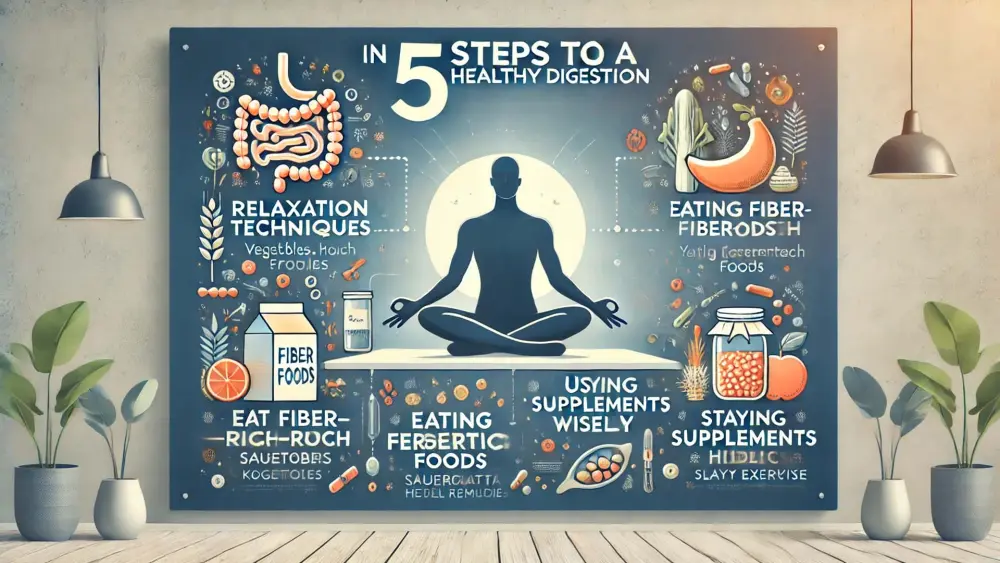
Medical Disclaimer
The information in this blog is for informational purposes only and is not a substitute for professional medical advice. While we do our best to provide accurate and up-to-date information, health situations are personal and advice may vary from one individual to another.
In case of digestive problems, health complaints or doubts about the use of supplements, we strongly recommend consulting a doctor, dietician or certified nutritionist.
Use of supplements, such as Reishi, Lion's Mane and Acai, can have effects on health and cause interactions with medication or existing conditions. Always consult a medical professional before adding any new supplements to your diet.
The authors and publishers of this blog accept no liability for any consequences resulting from applying the information in this article. Health and well-being are personal; always make an informed decision.