











Multiple Payment Options ✔️ Fast and discreet shipping ✔️ Customer Service Monday - Friday 10:00 - 16:00 ✔️ Free Goodies
Fast and discreet shipping!

WHAT IS KRATOM AND HOW DOES IT WORK?
Kratom is a tropical plant native to Southeast Asia that has been used for generations because of the unique properties of its leaves. In recent years, interest in kratom has also grown significantly in Europe. Many people are curious about its potential stimulating or relaxing effects, the different varieties available, and how to use kratom responsibly.
"Kratom (Mitragyna speciosa) is a plant whose leaves contain alkaloids such as mitragynine. The effects people experience vary depending on the strain, dosage, and individual. That is why it is important to educate yourself and approach its use responsibly."
In this comprehensive guide, you'll learn exactly what kratom is, how its active compounds work, the different types available, the effects users commonly report, the known risks, and what to consider if you want to learn more about this remarkable plant.
Curious about how botanical products can fit into a conscious lifestyle? Read more about natural support and balance.
Table of contents
What is kratom?
Kratom (Mitragyna speciosa) is a tropical tree belonging to the coffee family (Rubiaceae). It grows mainly in Thailand, Indonesia, Malaysia, Myanmar, and other parts of Southeast Asia. Depending on the growing conditions, a mature tree can reach a height of between 4 and more than 25 metres.
For centuries, local communities have used the leaves of this tree. Traditionally, the leaves were chewed or brewed into tea. Today, kratom is available worldwide in the form of powder, capsules, extracts, or crushed leaves.
Kratom has become increasingly popular in recent years, mainly because users report a wide variety of experiences. Some people choose kratom for a sense of energy and focus, while others are looking for a more relaxing experience. The effects someone experiences depend on several factors, including the strain used, personal sensitivity, and the amount consumed.
How does kratom work?
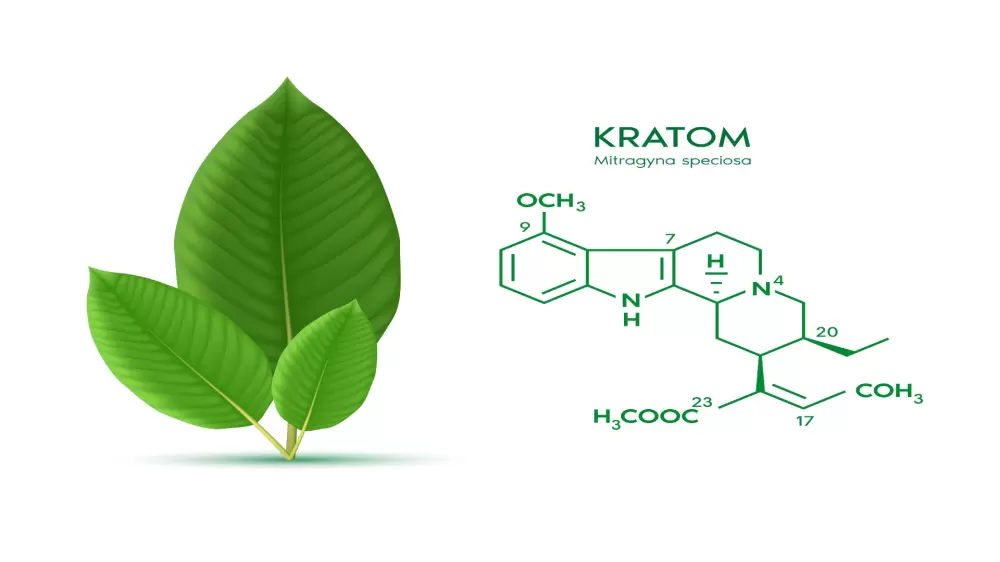
The effects of kratom are primarily determined by naturally occurring alkaloids found in its leaves. These compounds can interact with various receptors in the body, including receptors involved in pain perception and mood.
Users often report that the effects of kratom depend largely on the amount consumed. Lower amounts are frequently described as being more stimulating, while higher amounts are more commonly associated with relaxation. These are user experiences and can vary considerably from one person to another.
Would you like to learn more about responsible use and what to look out for? Read our guide on safe use, knowledge and context.
Several other factors can also influence the experience, including:
- the kratom strain;
- the origin of the leaves;
- the concentration of alkaloids;
- body weight;
- individual sensitivity;
- the use of other substances or medications.
As a result, there is no single effect that applies equally to everyone.
Which active compounds does kratom contain?
Scientists have identified more than forty different alkaloids in kratom. The best-known are:
- Mitragynine
- 7-Hydroxymitragynine
- Speciogynine
- Paynantheine
- Mitraphylline
Among these compounds, mitragynine receives the most scientific attention because it makes up the largest proportion of the plant's total alkaloid content. 7-Hydroxymitragynine occurs naturally in much smaller amounts but is also widely studied because of its interaction with specific receptors in the body.
The exact ratio of these alkaloids varies from one harvest to another. Factors such as climate, soil conditions, leaf maturity, drying methods, and growing region all influence the final composition. This means that two batches of the same kratom variety may still produce different user experiences.
For this reason, experienced users often look beyond the colour of a kratom strain and also consider the supplier, origin, product quality, and batch consistency.
What effects do users report from kratom?
The experience of using kratom varies greatly from person to person. Factors such as the strain, dosage, body weight, tolerance, and the composition of a particular batch all play a role. Because of this, it is impossible to predict exactly how someone will experience kratom.
Many users report that lower amounts are more often associated with a stimulating effect, while higher amounts are more commonly described as relaxing. These are user-reported experiences and should not be interpreted as guaranteed effects.
Experiences commonly reported by users
- Increased energy and motivation.
- Improved concentration and focus.
- A more positive mood.
- Greater relaxation.
- Relief from physical discomfort.
- A calmer state of mind.
Not everyone experiences the same effects. Even two different batches of the same kratom variety may feel different because the concentration of alkaloids can vary from one harvest to another.
Lower and higher amounts
Although there is no universal threshold, users often describe smaller amounts as being associated with:
- greater alertness;
- a more active mindset;
- increased motivation;
- improved focus.
Larger amounts are more frequently associated with experiences such as:
- greater physical relaxation;
- a calmer overall experience;
- reduced activity;
- a stronger desire to rest.
Because everyone responds differently, it is important to approach kratom with caution. There is no universal amount that produces the same effect for everyone.
What types of kratom are available?
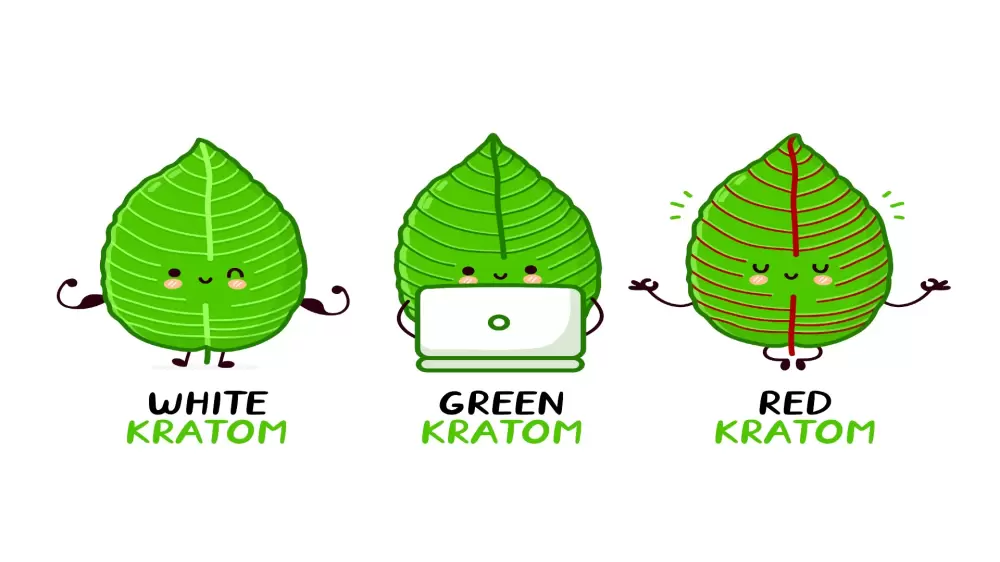
Kratom is generally classified according to the colour of the leaf veins. The three best-known categories are white, green, and red. These colours provide a general indication of the characteristics commonly described by users, but they do not guarantee a specific experience.
Colour
- White kratom
- Green kratom
- Red kratom
Commonly associated with
- White kratom – Energy, alertness and focus.
- Green kratom – A balanced profile between energy and relaxation.
- Red kratom – Calmness and relaxation.
Popular varieties
- White kratom – White Maeng Da, White Thai.
- Green kratom – Green Malay, Green Thai.
- Red kratom – Red Thai, Red Borneo.
White kratom
White varieties are often chosen by users looking for a more energising profile. They are frequently described as suitable for moments when concentration or productivity is desired.
For example, take a look at White Maeng Da Kratom.
Green kratom
Green varieties are often regarded as a middle ground between white and red kratom. Many experienced users choose green kratom because of its balanced character.
You can also view Green Thai Kratom.
Red kratom
Red varieties are generally described by users as the most relaxing category. As a result, they are often chosen for quiet moments or evening use.
Also see Red Thai Kratom.
Why don't the colours tell the whole story?
Many beginners assume that the colour of a kratom variety completely determines the effects they will experience. In reality, the picture is more nuanced. Experienced users usually look beyond colour alone.
Several other factors also play an important role, including:
- the region where the trees are grown;
- the season in which the leaves were harvested;
- the maturity of the leaves;
- the drying process;
- the concentration of alkaloids;
- differences between batches.
Because of these variables, the same variety from a different harvest may produce a different experience. Reliable suppliers regularly test their products for quality and aim to provide consistent batches.
Experienced kratom users rarely choose a product based on colour alone. Origin, quality, batch consistency and laboratory testing are considered just as important.
Safe use and potential risks
As with many natural products, responsible use is important when it comes to kratom. Although many people report positive experiences, kratom is not without risks. The likelihood of unwanted effects generally increases with higher amounts, frequent use, or when combined with other substances.
If you take medication or have a medical condition, always consult a physician before using kratom. Extra caution is also advised if you have a personal or family history of mental health disorders or substance dependence.
Possible side effects
Not everyone experiences side effects. When they do occur, they are often dose-dependent. Side effects described in scientific literature and user reports include:
- Dry mouth.
- Nausea.
- Dizziness.
- Reduced appetite.
- Constipation.
- Drowsiness.
- Sweating.
- Increased heart rate.
Very high amounts or prolonged intensive use have been associated with more serious health risks, including liver problems, dependence, and withdrawal symptoms. The likelihood of these effects varies from person to person.
Can kratom be addictive?
Yes. Scientific research indicates that regular kratom use can lead to tolerance and dependence. The risk increases particularly with daily use over an extended period.
People who suddenly stop after prolonged use may experience withdrawal symptoms, including:
- restlessness;
- sleep disturbances;
- muscle aches;
- irritability;
- fatigue;
- mood swings.
For this reason, many experienced users choose to alternate periods of use with several rest days.
Do not combine kratom with other substances without caution
Combining kratom with alcohol, opioids, sleeping medication, or other psychoactive substances may increase the risk of adverse effects. Certain medications may also interact with the active compounds found in kratom.
For that reason, extra caution is recommended if you are taking medication or have underlying health conditions. When in doubt, always seek professional medical advice.
What should you look for when buying kratom?
The quality of kratom can vary considerably between suppliers. Not every product contains the same concentration of alkaloids, and harvesting, processing, and storage methods all influence the final quality.
When purchasing kratom, consider the following:
- a reputable supplier;
- clear information about the product's origin;
- fresh batches;
- detailed product information;
- laboratory testing whenever available.
Browse the complete range in our kratom smartshop.
Is kratom legal?
The legal status of kratom varies significantly from one country to another. In some countries it can be sold legally, while others restrict or prohibit its possession, sale, or use.
Always check the current legislation in your country or your travel destination before purchasing or taking kratom with you.
Who should avoid kratom?
Although many adults choose to use kratom, it is not suitable for everyone.
It is generally recommended to avoid kratom if you:
- are pregnant or breastfeeding;
- are under 18 years of age;
- take medication that affects the central nervous system;
- have liver or kidney disease;
- have cardiovascular conditions;
- are prone to substance dependence;
- have a current or previous mental health disorder without first consulting a physician.
If you are unsure whether kratom is appropriate for your situation, always seek advice from a doctor or another qualified healthcare professional.
Summary
Kratom (Mitragyna speciosa) is a unique plant native to Southeast Asia that contains naturally occurring alkaloids. Users report a wide variety of experiences ranging from increased energy and focus to greater relaxation, depending on the strain, the amount used, and individual sensitivity.
Because every batch is different and scientific research into kratom is still ongoing, responsible use remains essential. By educating yourself, choosing high-quality products, and using kratom mindfully, you can make a more informed decision about whether it aligns with your personal expectations.
Since every experience is unique, you can also read our guide on consciousness and experience to learn more about the factors that may influence your personal experience.
Frequently asked questions
Read more
- Want to learn more about responsible use? Read How safe is kratom and is there any risk of addiction?
- Curious about the potential applications of kratom? Discover more in 7 therapeutic health benefits of introducing kratom into your diet.
Sources
- National Center for Biotechnology Information (NCBI) – The Medicinal Chemistry and Neuropharmacology of Kratom.
- National Center for Complementary and Integrative Health (NCCIH) – Kratom.
- Jellinek – What is kratom?.
- WebMD – Kratom: Uses, Side Effects and More.
- European Monitoring Centre for Drugs and Drug Addiction (EMCDDA) – Kratom Report.
Disclaimer
This article is intended for informational and educational purposes only and should not be considered medical advice. Do not use kratom if you are pregnant, breastfeeding, taking medication, or have underlying health conditions without first consulting a physician or another qualified healthcare professional. Laws and regulations regarding kratom vary from country to country. Always check the current legislation that applies in your location before purchasing or using kratom.