





Multiple Payment Options ✔️ Fast and discreet shipping ✔️ Customer Service Monday - Friday 10:00 - 16:00 ✔️ Free Goodies
Fast and discreet shipping!

THE MEDICINAL EFFECT OF THE CHAGA MUSHROOM
The Chaga mushroom is a remarkable fungus that has been used for centuries in traditional herbal and mushroom practices. Especially in cold regions such as Siberia and Northern Europe, Chaga is well known as a unique birch fungus that is commonly processed into tea, extracts and supplements.
"Chaga is a hard fungus that grows on birch trees and is commonly used in tea, extracts and capsules because of its rich composition of antioxidants and natural compounds."
In this guide, you'll learn exactly what the Chaga mushroom is, how people use it, which benefits are commonly mentioned and what you should take into account before using it.
What is the Chaga mushroom?
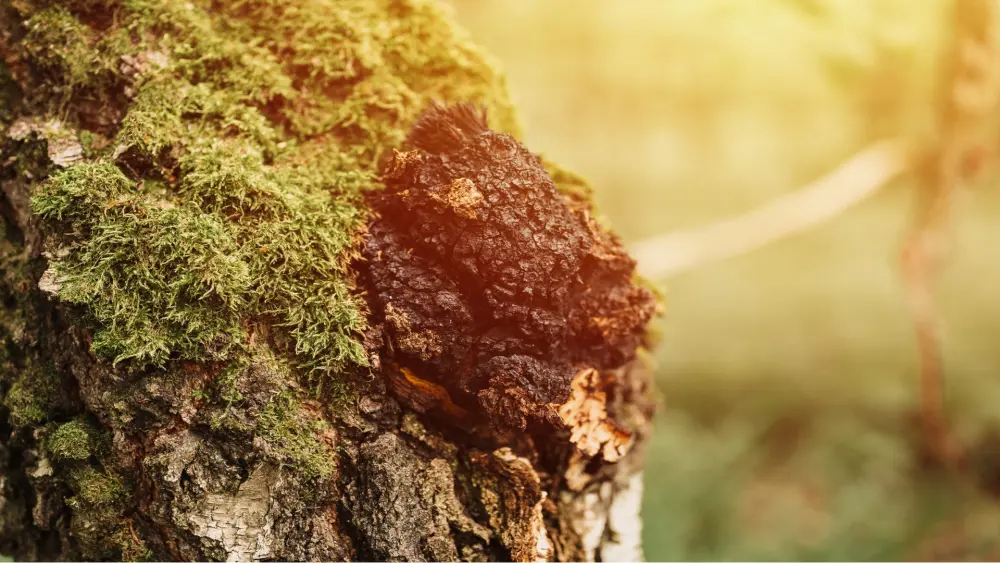
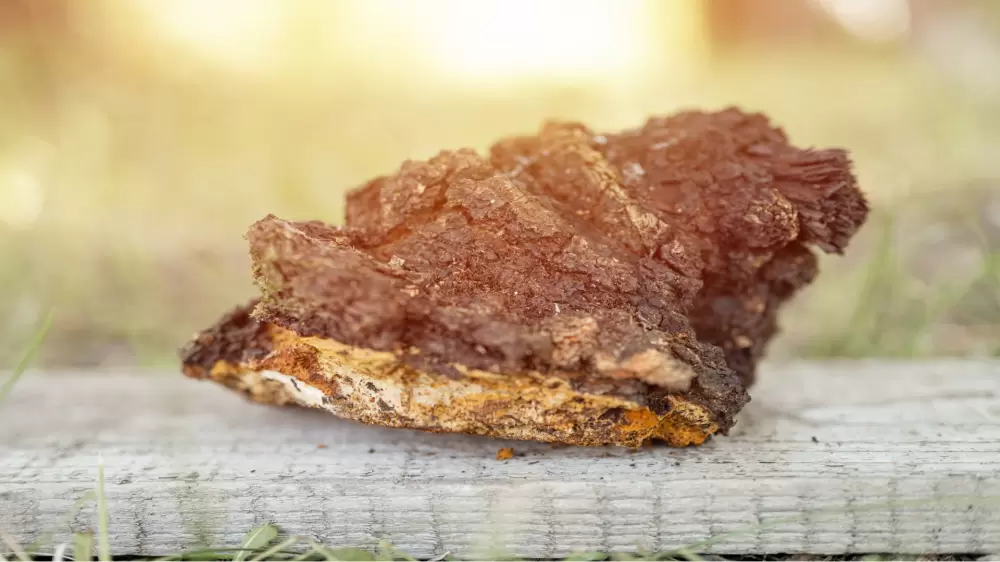
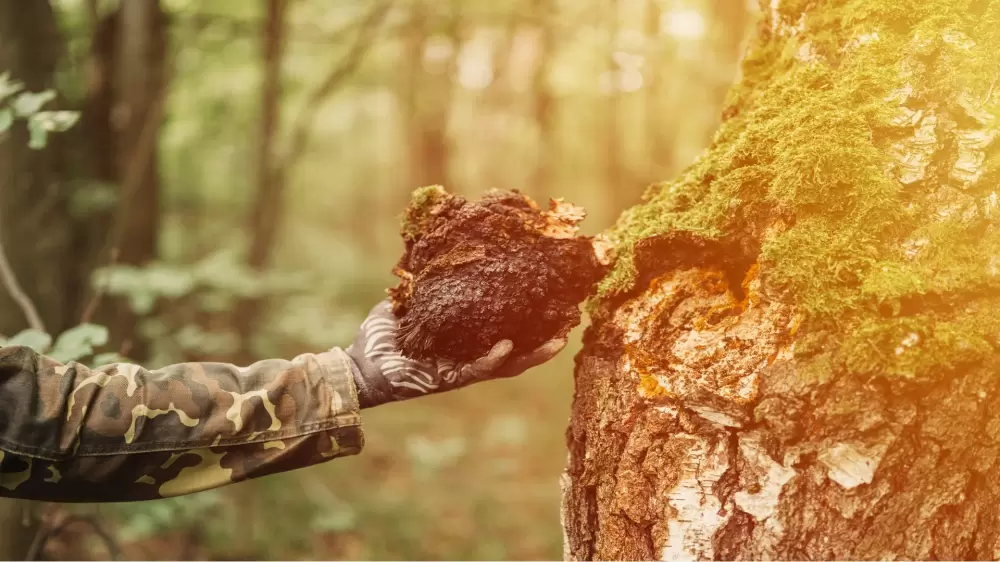
The Chaga mushroom is officially known as Inonotus obliquus and mainly grows on birch trees in cold climates. It is also known as the birch conk and is often referred to as the Mushroom of Immortality. On the outside, Chaga looks like a dark, almost charred fungus, while the inside has a warm orange colour.
Chaga is one of the most popular medicinal mushrooms, alongside Lion's Mane, Reishi, Cordyceps, Turkey Tail and Maitake.
The mushroom has been used for a long time in traditional practices and is now mainly sold as powder, extract or capsules.
Chaga is often described as a powerful medicinal mushroom, but many people wonder where these natural products actually fit within the broader world of natural substances. If you'd like to understand this better, read what are natural psychedelics.
Which benefits are commonly mentioned?
Chaga contains various natural compounds such as polysaccharides, antioxidants and melanin. Because of this, the mushroom is often mentioned in discussions about balance, vitality and immune support.
Why do people use Chaga?
- Because of its high concentration of antioxidants.
- As part of a daily wellness routine.
- To support balance and vitality.
- Because Chaga has long been used in traditional herbal practices.
- As an alternative to coffee or other hot beverages.
The list of possible benefits sounds impressive, which is why many people wonder what they can realistically expect themselves. If you'd like to get a better understanding beforehand, read what to expect.
Although a great deal of research is being conducted on medicinal mushrooms, it is important to view health claims critically. Experiences differ from person to person, and Chaga is not a replacement for medical treatment.
Also read more about other medicinal mushrooms and their applications.
Vitamins and minerals in Chaga
Chaga naturally contains a variety of nutrients and bioactive compounds. The exact composition varies depending on the growing location and processing method.
Nutrients commonly found in Chaga
- B vitamins
- Vitamin D
- Potassium
- Zinc
- Iron
- Dietary fibre
- Amino acids
- Manganese
- Antioxidants
Its particularly high concentration of antioxidants is one of the reasons why Chaga has become popular within the world of superfoods and functional nutrition.
How do you use Chaga?
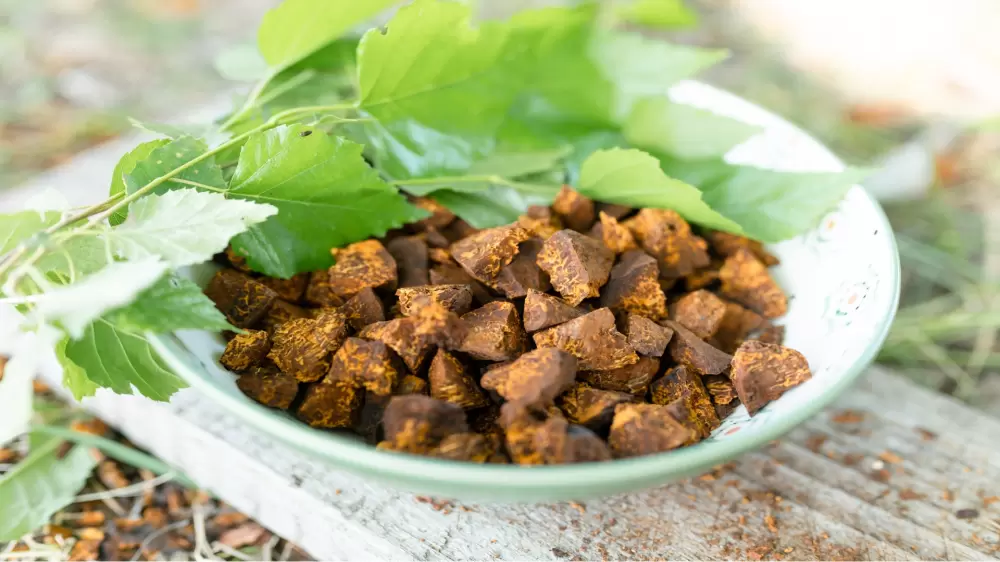
Because Chaga has a very hard texture, the mushroom is usually processed into powder, tea, extract or capsules. This makes it much easier to incorporate into your daily routine.
Popular ways to use Chaga
- Prepare Chaga tea using Chaga powder or dried pieces.
- Add a Chaga extract to coffee, tea or smoothies.
- Take Chaga capsules as a dietary supplement.
- Mix Chaga powder into hot beverages.
"Chaga is a birch fungus that is commonly used as tea, extract or dietary supplement."
When using supplements, it is always advisable to follow the manufacturer's recommended dosage and increase your intake gradually.
Also view:
Possible side effects and considerations
Although Chaga is a natural product, this does not automatically mean it is suitable for everyone. Some people choose to be extra cautious when using supplements or extracts.
Many people automatically associate natural products with safety, while interactions with medication may require additional attention. If you would like to know when using supplements may or may not be advisable, read when to use them and when not to.
When should you be extra careful?
- If you use blood thinners.
- If you have an autoimmune disorder.
- During pregnancy or while breastfeeding.
- If you have existing kidney problems.
Chaga contains relatively high levels of oxalates. For this reason, some people choose to limit their intake or consult a healthcare professional before use if they have existing medical conditions.
Conclusion
The Chaga mushroom is a unique birch fungus that has been used in traditional practices for centuries. Today, Chaga is popular as a tea, extract and dietary supplement because of its rich composition of antioxidants and naturally occurring compounds.
Whether you're curious about medicinal mushrooms or simply want to try a new functional beverage, Chaga remains one of the best-known mushrooms within this category.
Frequently Asked Questions