

The safest way to prepare for a truffle ceremony is to screen for risks in advance, consciously work with set & setting, choose a low dosage, and apply harm-reduction principles. [2]
What is a truffle ceremony?
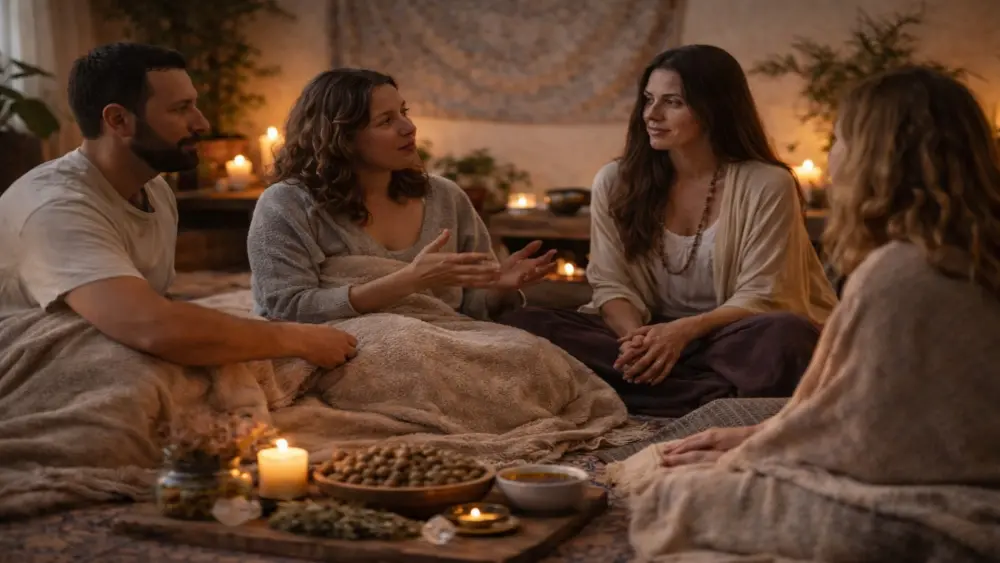
A truffle ceremony is a deliberately designed experience in which psilocybin truffles are used for introspection, emotional processing, or spiritual deepening [3]. The experience takes place in a calm environment and is often supported by intention work, music, and possibly guidance.
Psilocybin is converted in the body into psilocin, a substance that influences the serotonin 5-HT2A receptors. This temporarily alters communication between brain regions, which can lead to changed perception, intensified emotions, and profound insights.
What does psilocybin do in the body?
Psilocybin temporarily disrupts fixed patterns of thinking and perception, allowing new perspectives and emotional insights to become accessible.
Why do people choose a truffle ceremony?
People participate in a truffle ceremony for various reasons. Often it involves self-exploration, emotional processing, or spiritual deepening.
- Personal and spiritual development
- Reflection on life questions or patterns
- Breaking through entrenched thought processes
Important:
A truffle ceremony is not a quick fix or a replacement for therapy, but an intensive process that requires preparation and integration. [1]
Who is a truffle ceremony (not) suitable for?
Not everyone is suitable to participate in a truffle ceremony. An honest self- or participant screening is essential for safety.
Not recommended for:
- A personal or family history of psychotic disorders
- Severe, untreated depression or suicidal thoughts
- Recent psychosis, manic episode, or severe panic attacks
Physical considerations
- Cardiovascular disease: temporary increase in heart rate and blood pressure
- Medication: possible interactions (e.g., MAO inhibitors, lithium)
- Pregnancy and breastfeeding: use is discouraged
How do you prepare a truffle ceremony as safely as possible?
1. Set: mindset and intention
The ‘set’ refers to your mental state, expectations, and intentions. It helps to formulate your intention in advance and have realistic expectations.
2. Setting: environment and guidance
A safe setting is calm, familiar, and low in stimuli. Many people choose a lying position, an eye mask, and music. An experienced trip sitter can provide additional safety.
3. Dosage: start low (indicative)
Note: The ranges below are indicative and not personal advice. Effects vary by person, product, preparation, and setting. If in doubt, choose lower or postpone. [4]
- 5–10 grams: low dose
- 10–15 grams: medium dose
- >15 grams: high, very intensive dose
Always start on the low end. A dose that is too high cannot be reversed.
4. Harm reduction and integration
- Do not combine psilocybin with alcohol or other drugs
- Allow sufficient time afterward for rest and reflection
- Never use psychedelics as a replacement for professional care
Where can you attend a truffle ceremony and what should you look for?
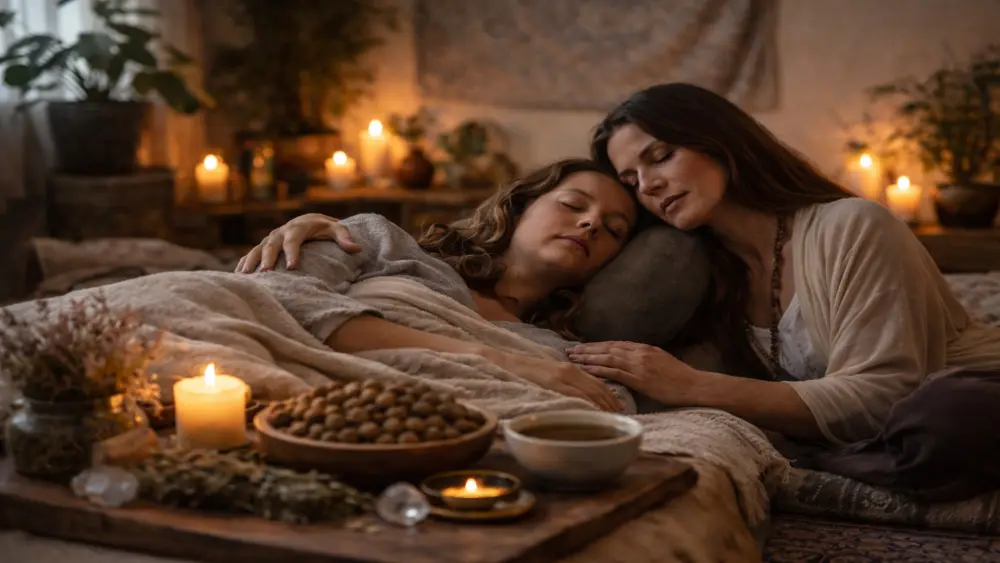
Truffle ceremonies are offered in the Netherlands and elsewhere by various facilitators and organizations. They usually take place in a group setting or individually, under the guidance of a facilitator. Overviews of ceremonies and providers can be found online, but quality and professionalism vary greatly [5].
This article does not recommend specific providers; use the checklist below to responsibly assess whether a setting suits you.
What should you look for in a ceremony provider?
Transparency about screening, preparation, guidance, and aftercare is essential.
- Is there prior screening for mental and physical health?
- Is there attention to preparation and integration afterward?
- Is the group size manageable?
- Are risks and contraindications clearly discussed?
Be cautious of providers who offer guarantees of healing or spiritual breakthroughs. Serious facilitators emphasize responsibility, safety, and personal boundaries.
Frequently asked questions about truffle ceremonies
Read more about this topic
- What are psilocybin truffles?
- Natural remedies for depression
- What are set & setting and why are they important?
- What is a trip sitter and what are the tasks?
- Range of products psilocybin truffles
Sources
- Carhart-Harris et al. (2016). Psilocybin with psychological support for treatment-resistant depression. The Lancet Psychiatry. Publication
- Johnson et al. (2008). Guidelines for safety in human hallucinogen research. Journal of Psychopharmacology. PubMed
- Griffiths et al. (2011). Psilocybin and mystical-type experiences. Psychopharmacology. PubMed
- Studerus et al. (2011). Subjective effects of psilocybin in healthy humans. Psychopharmacology. PubMed
- Retreat Guru. Overview of truffle ceremonies and providers. Source
Disclaimer: This article is intended solely for informational and educational purposes and does not constitute medical, psychological, or legal advice.