







Multiple Payment Options ✔️ Fast and discreet shipping ✔️ Customer Service Monday - Friday 10:00 - 16:00 ✔️ Free Goodies
Fast and discreet shipping!

IS IT BETTER TO MEDITATE WITH HERBS OR AROMATHERAPY?
People have been meditating for thousands of years, for example to unwind, focus or gain self-insight. In recent years, more and more people are choosing to combine meditation with external tools, including herbs and aromatherapy. With these, they want to deepen their experience, but does it really work? In this article, we'll give you the answer.
What is the difference between herbs and aromatherapy?
First of all, it is important to know the difference between herbs and aromatherapy:
- When you use herbs in meditation, you take them, for instance in the form of tea or supplements. You can additionally vapourise the plants or burn dried herbs, which is possible with sage, for example.
- Meditating with aromatherapy works slightly differently, as here the essential oils of plants are diffused with a diffuser. You can also possibly inhale the essential oils directly.
So both methods use plants, but the method of administration and the effect on the body and mind differ.
How herbs can help with meditation
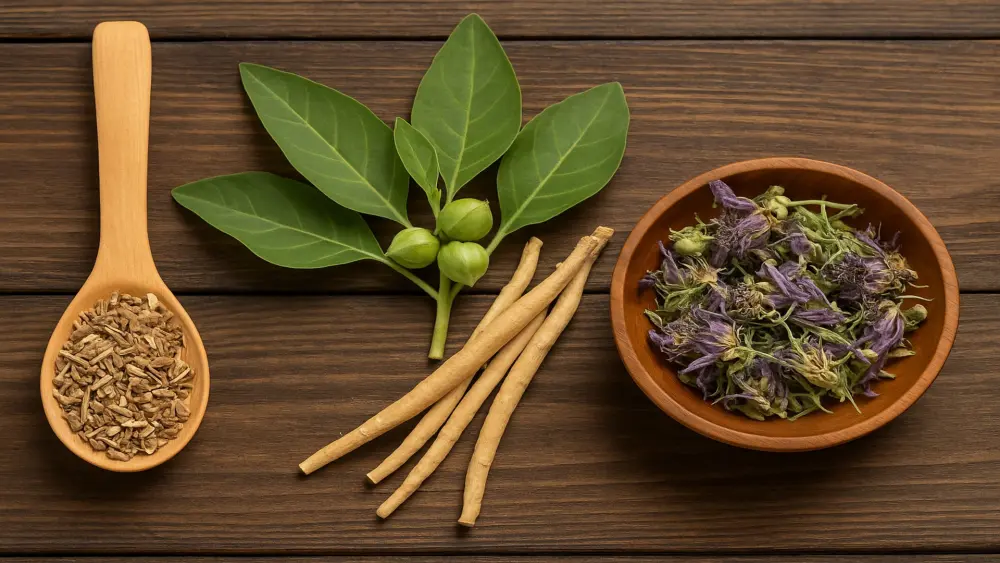
Herbs can have many different effects. For instance, they can calm your nervous system, but can also activate it. We list below a few herbs that many people use to meditate and what they do.
-
- Valerian: Valerian is described by many users as calming. Scientific research, such as this study (Source), also suggests valerian can increase the availability of gamma-aminobutyric acid in the brain, which promotes relaxation.
- Ashwagandha: Ashwagandha is considered an adaptogenic herb. Users often experience it as supportive for stress. A scientific study (Source) shows that it can potentially contribute to an increased sense of calm during meditation, although the effects vary from person to person.
- Passion flower: Passion flower is often used for its possible calming effects. According to one study (Source), it may have similar effects to oxazepam, but such findings are still limited and require more research.
Pros and cons of meditating with herbs
+ Advantages
- Reduction of anxiety
- Physical relaxation
- Better sleep, which can indirectly contribute to better meditation sessions
- Disadvantages
- Possible side effects
- Dosage and timing are crucial, but often difficult
How aromatherapy can help with meditation
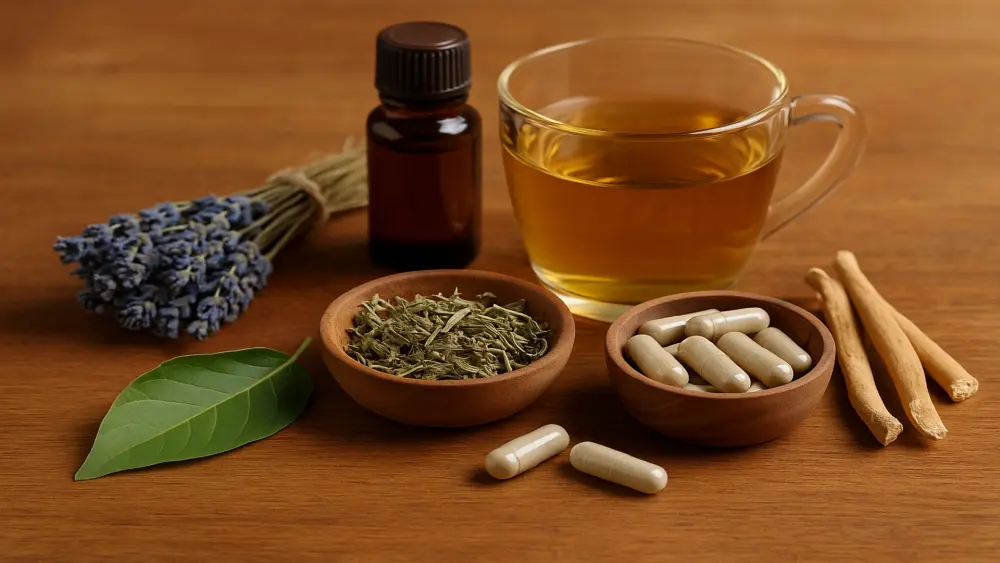
With aromatherapy, the scents come into direct contact with the limbic system in the brain via your nose, which is the part that processes memories and emotions. As a result, scents can quickly affect your mood. Researchers recommend using the essential oils below during aromatherapy meditations:
- Sandalwood oil: Sandalwood has a warm scent and is traditionally used in spiritual practices. Some people experience deeper meditation as a result. Research (Source) suggests a relaxing effect, but this experience is subjective and depends on personal preference. This research suggests that sandalwood oil can contribute to greater relaxation and deeper concentration.
- Lavender oil: Lavender oil is usually the most commonly used for increased relaxation. This scent is known for its anxiety-reducing properties. Therefore, this research shows that lavender oil can help significantly reduce stress and anxiety.
- Bergamot oil: Bergamot oil has a relaxing effect and also provides a fresh feeling. This scent is usually perfect for people who feel agitated while meditating. This is partly because bergamot oil can lower cortisol levels , according to this research.
Pros and cons of meditating with aromatherapy
+ Advantages
- Few side effects
- Works quickly
- Easy to use with a diffuser
- Disadvantages
- The effect is temporary
- Some people may experience headaches from the scents
- The effect depends on personal scent perception
Which works better for meditations?
Whether you meditate better with herbs or aromatherapy depends largely on your personal preferences and needs. If you struggle to quiet your mind, aromatherapy is often better. This is also the case if you are easily tense. Herbs, on the other hand, may be better if you suffer from long-term stress or insomnia. It may be even better to combine both options. For this, start your session by diffusing a calming scent and support your daily well-being with herbs. This way, your meditative experience may become deeper and more stable.
Disclaimer: The information in this article is for informational purposes only and does not replace medical advice from a doctor or other qualified healthcare professional. Always consult a medical professional before using herbs or essential oils, especially if you are on medication, have health problems or are pregnant. Use natural remedies with care and according to recommended dosages. Although many people report positive effects when using herbs or essential oils, these experiences are largely subjective. Not everyone will experience the same effects and the scientific evidence varies for each substance.