








Multiple Payment Options ✔️ Fast and discreet shipping ✔️ Customer Service Monday - Friday 10:00 - 16:00 ✔️ Free Goodies
Fast and discreet shipping!

PASSIONFLOWER AS A MAOI INCREASES THE EFFECT OF MUSHROOMS AND OTHER PSYCHEDELICS
Passion flower, also known as Passiflora incarnata, is a striking climbing plant best known for its calming properties. It has traditionally been used to promote relaxation, reduce restlessness, and support healthy sleep, but it is also of particular interest within the world of psychedelics.
This is because passion flower contains natural compounds that may have mild MAO-inhibiting properties. As a result, combining it with psychedelics such as magic mushrooms or magic truffles may influence the duration and intensity of the experience. In this guide, we explain what passion flower does, what an MAO inhibitor is, what psilohuasca means, and why caution is important.
"Passion flower contains natural compounds that may have mild MAO-inhibiting properties. As a result, combining it with psychedelics such as magic mushrooms and truffles may influence the duration and intensity of the experience."
What is passion flower?
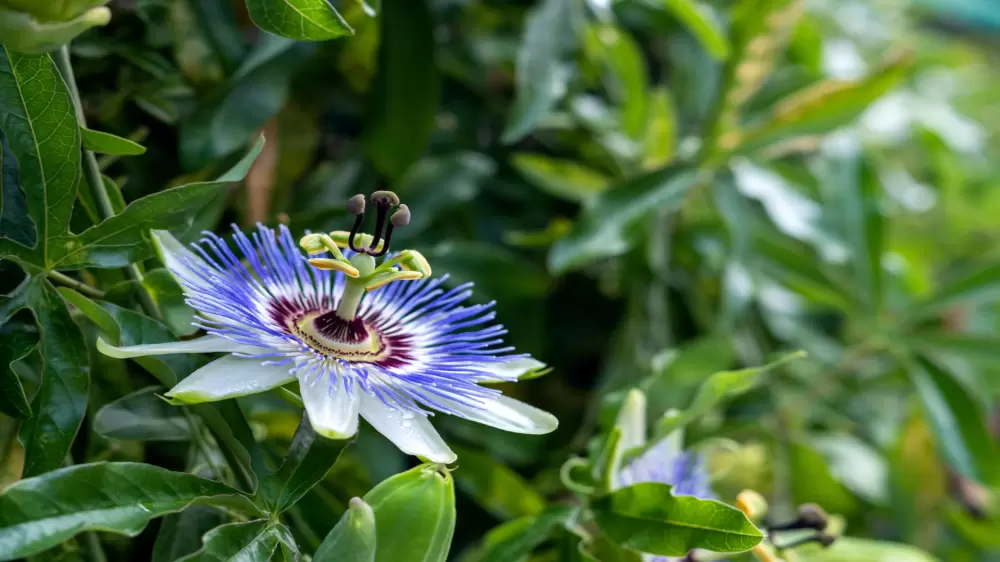
Passion flower is a climbing plant with distinctive flowers and has been used as a natural herb for centuries. The species Passiflora incarnata is the best-known variety used in herbal teas, tinctures, and extracts. The above-ground parts of the plant, including the leaves, flowers, and stems, are most commonly used.
Many people use passion flower because of its calming nature. It is often chosen to support relaxation, inner calm, and restful sleep. Passion flower is available as a dried herb, tea, extract, or tincture.
How does passion flower work?
Passion flower is primarily associated with promoting relaxation and mental calmness. People often choose this herb when they want to unwind or create a relaxing evening ritual, such as enjoying a cup of passion flower tea before bedtime.
Within the context of psychedelics, its potential MAO-inhibiting properties are of particular interest. An MAO inhibitor can affect how certain compounds are broken down in the body. As a result, combining passion flower with psychedelic substances may cause the effects to feel stronger or last longer than expected.
Which active compounds does passion flower contain?
Passion flower contains various naturally occurring plant compounds, including flavonoids and alkaloids. Flavonoids are plant-based compounds that contribute to the color of flowers and are also found in fruits and vegetables.
Compounds such as harmine and harmaline are also frequently mentioned in relation to passion flower. These substances are known for their MAO-inhibiting properties. This is one of the reasons why passion flower has become of interest to experienced users exploring combinations with psychedelics.
Would you like to learn more about the active compounds in magic mushrooms and truffles? Read our guide on psilocybin and psilocin.
What is an MAO inhibitor?
MAO stands for monoamine oxidase, an enzyme that helps break down certain neurotransmitters such as serotonin, dopamine, and norepinephrine. These neurotransmitters play an important role in mood, energy, motivation, and perception.
An MAO inhibitor slows down this breakdown process, allowing certain compounds to remain active in the body for longer. This principle is also found in some medications but can also occur naturally in certain plants.
When neurotransmitters are broken down more slowly, this may noticeably influence the way a psychedelic experience is perceived. If you would like to better understand how psychedelic experiences can unfold, read what to expect.
How does an MAO inhibitor work?
MAO stands for monoamine oxidase, an enzyme responsible for breaking down neurotransmitters such as serotonin, dopamine, and norepinephrine. An MAO inhibitor slows this process, allowing these compounds to remain active in the body for a longer period.
Because many psychedelics affect the serotonin system, inhibiting MAO may influence both the duration and intensity of certain psychedelic experiences. This is why MAO inhibitors are frequently discussed in relation to ayahuasca, magic mushrooms, and truffles.
Since serotonin and dopamine influence mood and perception, slowing their breakdown can have noticeable effects. This makes MAO inhibitors powerful compounds that should always be approached with care.
How do MAO inhibitors affect psychedelics?
Many psychedelic substances act through serotonin receptors in the brain. As a result, an MAO inhibitor can influence the way a psychedelic experience unfolds. When the breakdown of certain compounds is slowed down, the experience may become more intense or last longer.
This does not mean that every combination is predictable. The outcome depends on the substance, dosage, individual sensitivity, experience, setting, and the use of other substances or medications. This is precisely why caution is essential.
Passion flower and magic mushrooms: what is psilohuasca?
Magic mushrooms and magic truffles contain psilocybin, which is converted into psilocin in the body. These compounds are responsible for the psychedelic effects. A typical psilocybin experience usually lasts several hours.
When psilocybin or psilocin is combined with an MAO inhibitor, the combination is commonly referred to as psilohuasca. In theory, this may deepen, strengthen, or prolong the experience. Some experienced users choose passion flower for this purpose because it is generally considered milder than stronger pharmaceutical MAO inhibitors.
Nevertheless, caution remains important. Even a mild MAO inhibitor may influence the intensity of a psychedelic experience. People with little or no experience with magic mushrooms, truffles, or microdosing are advised to avoid combining them with MAO inhibitors.
Combining an MAO inhibitor with psychedelics can noticeably change both the intensity and duration of a trip. If you would like to understand why preparation and circumstances play such an important role, read our guide on set, setting, and intention.
What are the risks of combining passion flower with psychedelics?
Combining passion flower with psychedelics can make the experience less predictable. A trip may become longer, stronger, or more emotionally intense than expected. While this may seem interesting to experienced users, it can easily become overwhelming for beginners or people who are particularly sensitive.
In addition, MAO inhibitors may interact with medications, supplements, other herbs, or certain substances. Extra caution is especially important with anything that affects serotonin, dopamine, or mood.
Possible side effects of incorrect or excessive use may include dizziness, headaches, restlessness, insomnia, nausea, or physical tension. If severe symptoms occur or you are unsure, medical advice should always be sought.
Because the appropriate amount varies greatly from person to person, many people are unsure what a safe approach looks like. If you would like to know when use may or may not be appropriate, read when to use—or not to use.
Safe use and important considerations
Although passion flower is generally considered a mild herb, this does not mean that every combination is safe. The strength of extracts can vary considerably, and personal sensitivity also plays an important role.
Do not combine passion flower with psychedelics if you are taking medications that affect serotonin, mood, blood pressure, or the nervous system unless you have received professional medical advice.
Extra caution is recommended in the following situations:
- using antidepressants or other psychiatric medication;
- using other MAO inhibitors;
- heart disease or high blood pressure;
- pregnancy or breastfeeding;
- little or no experience with psychedelics;
- an unsafe or stressful setting.
If you would like to learn more about this subject, first build a solid understanding of dosage, set and setting, potential interactions, and how psilocybin works. Never experiment with combinations involving MAO inhibitors without proper preparation.
Frequently Asked Questions
Summary
Passion flower is a well-known calming herb that also contains natural compounds with possible mild MAO-inhibiting properties. As a result, combining passion flower with magic mushrooms or truffles may influence the duration and intensity of a psychedelic experience.
Although some experienced users deliberately experiment with combinations such as psilohuasca, these effects remain unpredictable. Factors such as dosage, individual sensitivity, medications, and set and setting play an important role. If you choose to use passion flower, always do so responsibly and make sure you understand the potential interactions before combining it with psychedelic substances.
Would you like to learn more about responsible psychedelic use? Also read our guide on safe use, knowledge, and context.